19.10.2026
Mudrovitsch, Morales Antoniazzi, and Ferrer Mac-Gregor Present a collective volume on Conventionality Control at the Inter-American Court of Human Rights
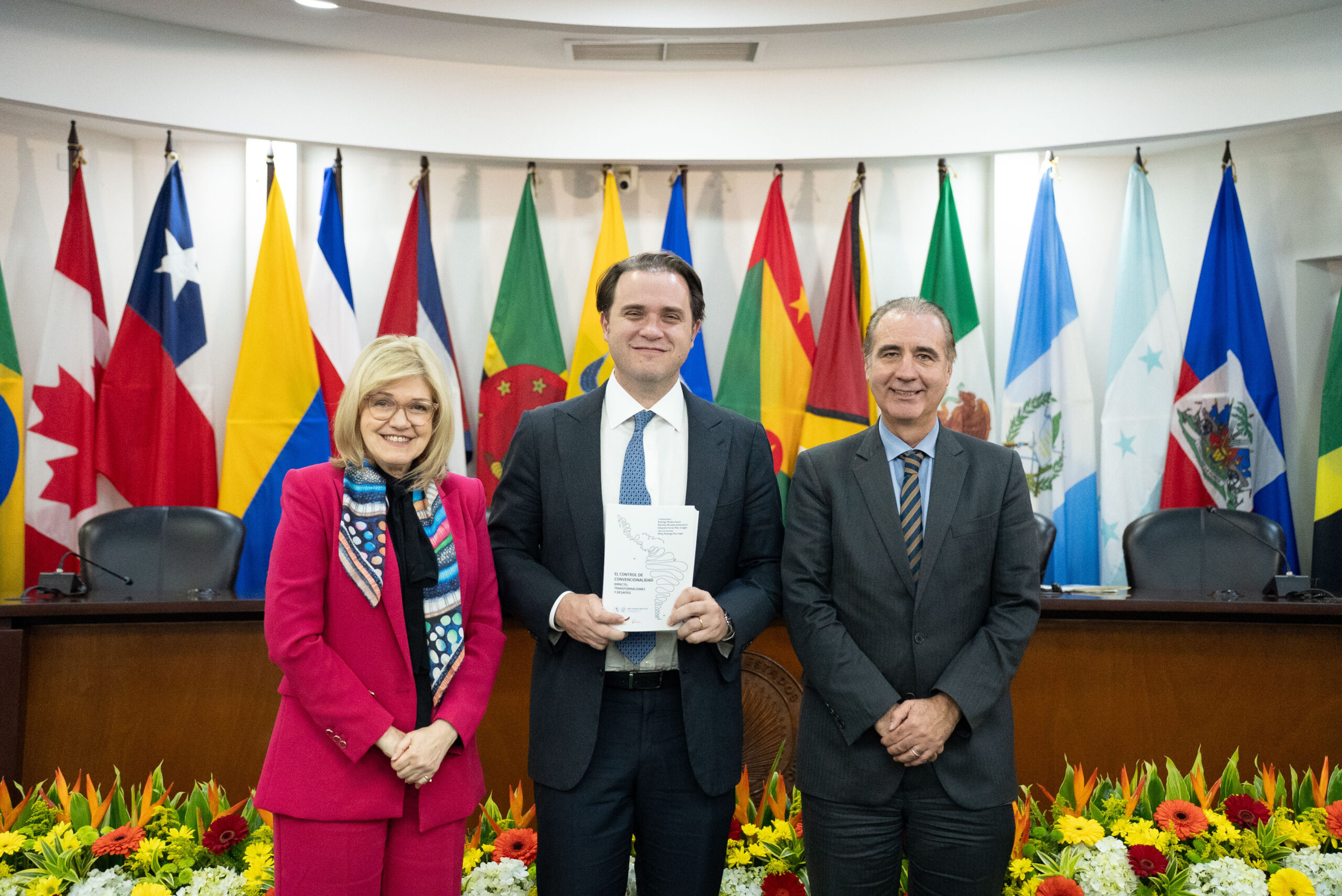
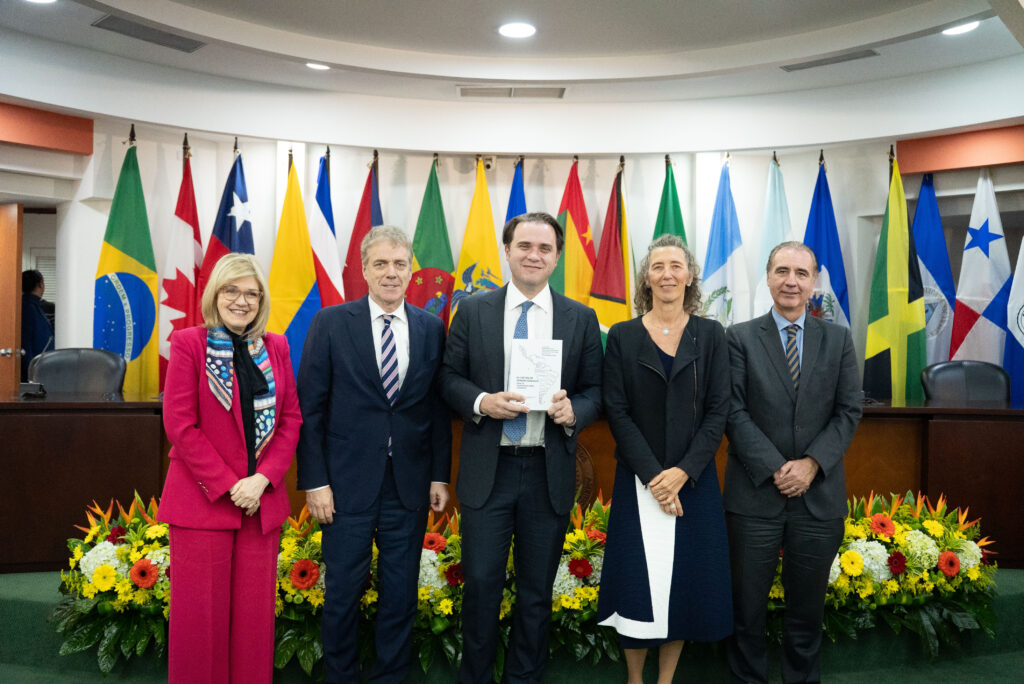
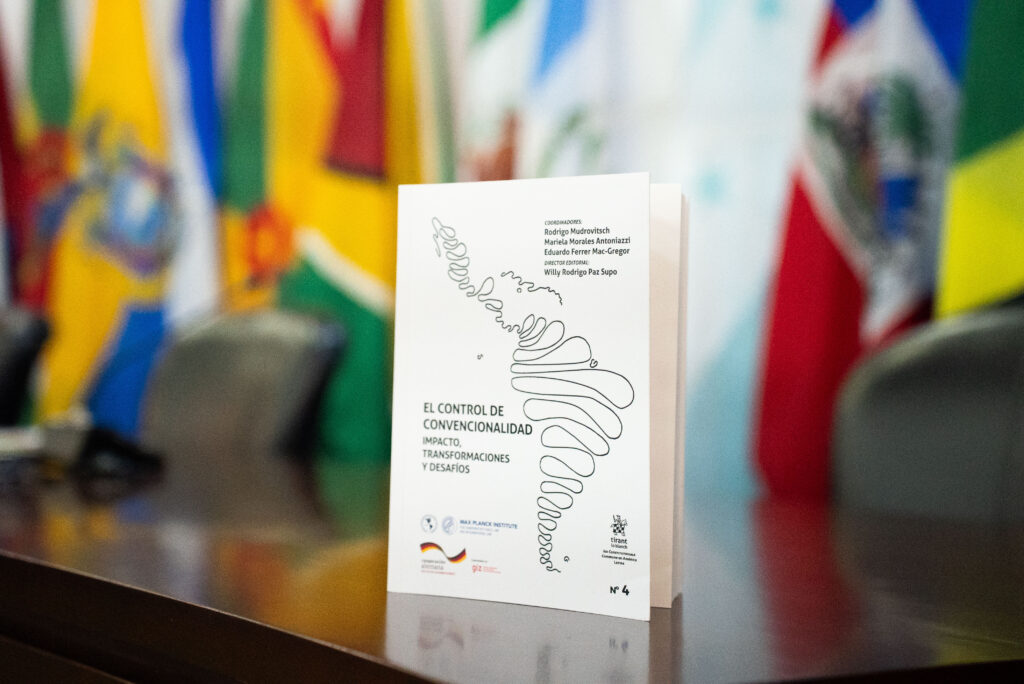
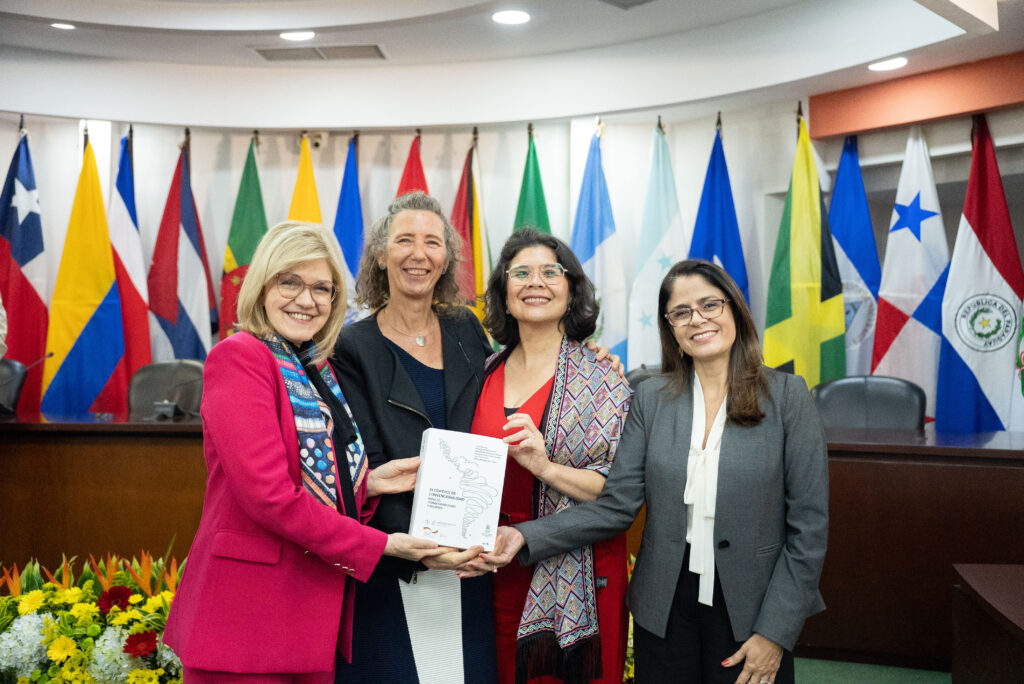
On Tuesday, October 13, 2026, the auditorium of the Inter-American Court of Human Rights (IACHR), in Los Yoses, San Pedro (Costa Rica), hosted the presentation of the book El control de convencionalidad. Impacto, transformaciones y desafíos (Connventionality Control: Impact, Transformations, and Challenges), as part of the 8th Forum of the Inter-American Human Rights System, El control de convencionalidad en el Sistema Interamericano: a 20 años de la sentencia del caso Almonacid Arellano y otros vs. Chile.” The coordinators Rodrigo Mudrovitsch, current president of the Inter-American Tribunal; Mariela Morales Antoniazzi, co-founder and coordinator of the ICCAL project at the Max Planck Institute for Comparative Public Law and International Law (MPIL); and Eduardo Ferrer Mac-Gregor Poisot, former judge and former president of the Inter-American Court of Human Rights and member of the International Commission of Jurists, expressed their gratitude to Willy Rodrigo Paz Supo for his editorial direction and to the authors, as well as for the financial support provided by the German Society for International Cooperation (GIZ) to make the work available online and for the publishing efforts of Tirant lo Blanch.
This volume is dedicated in memoriam of Sergio García Ramírez, former judge and former president of the Inter-American Court of Human Rights. In 2003, in his concurring opinion in Myrna Mack Chang v. Guatemala, he wrote that it is not possible to “internationally dissect the State,” leaving the actions of some of its organs outside the “scope of treaty compliance.” Three years later, on September 26, 2006, the Inter-American Court unanimously adopted the expression in Almonacid Arellano v. Chile.
Twenty years after Almonacid, this collective work takes stock. It brings together forty-seven contributions from sixty-five authors from 25 countries, representing the diverse actors in Latin America’s human rights community of practice, but extending to Europe, Africa, and Asia. Its five parts examine the triad of impact, transformations, and challenges. Over the course of these two decades, conventionality control has become the essential mechanism of a common Latin American legal framework. At the same time, it circulates through other legal systems as a functional equivalent. The doctrine does not travel as a transplant, but rather as a mirror in which other systems recognize their own techniques. Its future is intertwined with independent institutions that exercise it and with an academic community that analyzes the Latin American approach.
The metaphor of the "second floor" and its foundations
In their chapter, Armin von Bogdandy and Manuel Góngora offer an emblematic image to reveal the scope of conventionality control. They assert that, for two centuries, Latin American constitutionalism was a residential complex: distinct dwellings, some brighter, others with structural weaknesses, but all within the same residence. The decisive move by the Inter-American Court was to add a second floor to that building. And conventionality control with the Convention is the dogmatic staircase connecting the national floor with the regional one.
Its foundations have been built case by case, with the normative basis in Articles 1.1 and 2 of the American Convention on Human Rights, which are intended to ensure respect for, guarantee, and bring domestic law into conformity with the Convention; Article 29, which contains the pro persona principle; Article 25, regarding effective remedies, which makes the judge the primary guardian of rights; and Articles 26 and 27 of the Vienna Convention concerning pacta sunt servanda and the prohibition on invoking domestic law to breach a treaty.
Structured in five parts, the volume examines how this doctrine has taken root in Latin American legal systems, the methodologies of reception, judicial practice, the parties subject to compliance, and the scope and intensity of oversight. While cases of abuse are noted, the mapping of national studies documents the interaction with the Inter-American System, while also incorporating the perspectives of human rights defenders, NGOs, and public defenders’ offices. Twenty years after the leading case, this collective work highlights the central role of conventionality control for the ICCAL project. The doctrine fulfills a social function as a legal shield against authoritarian regimes, fosters dialogue, and guides transformative regional constitutionalism.