14.10.2026
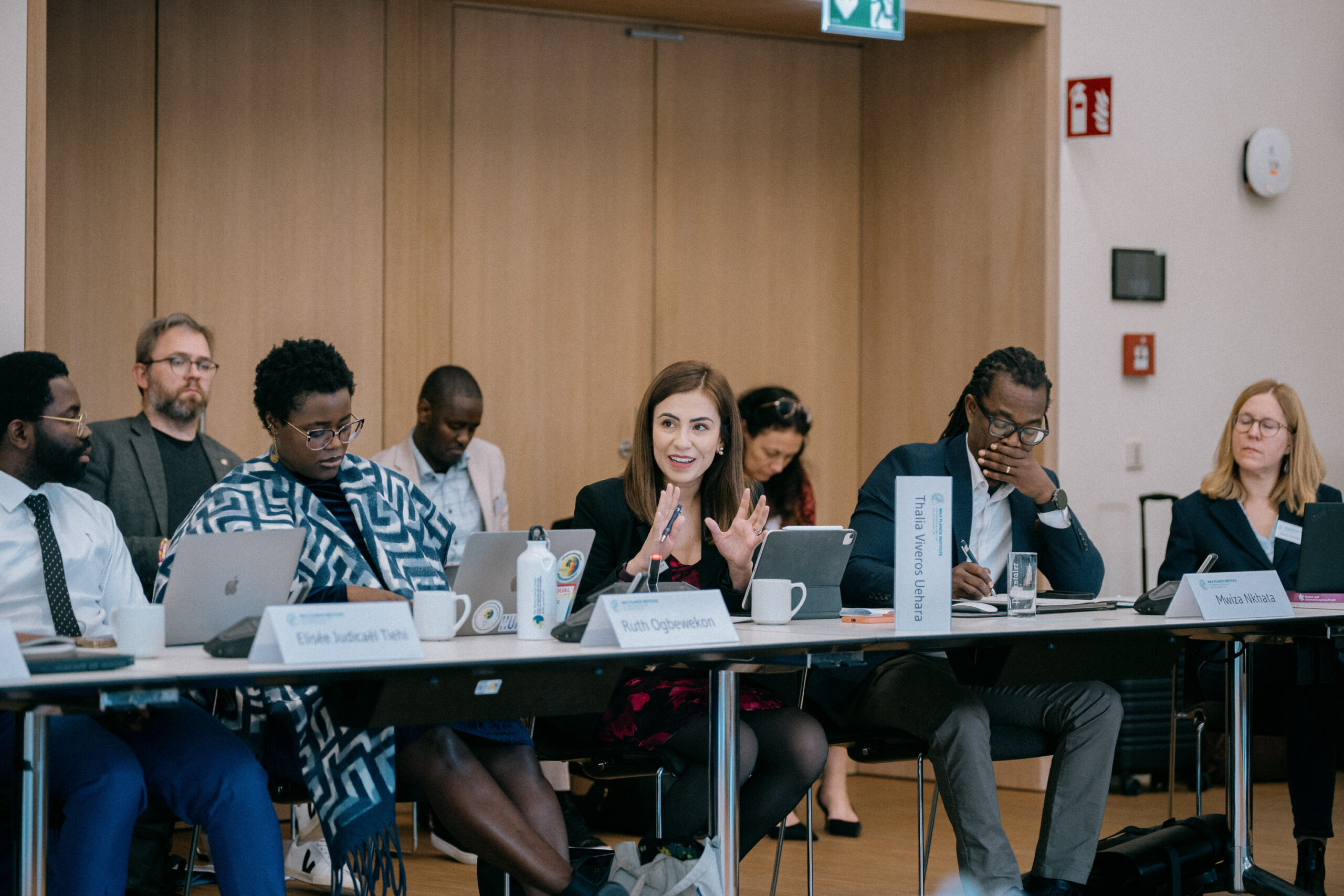
Thalia Viveros Uehara moderates a panel on the African Court’s institutional relations at its twentieth anniversary
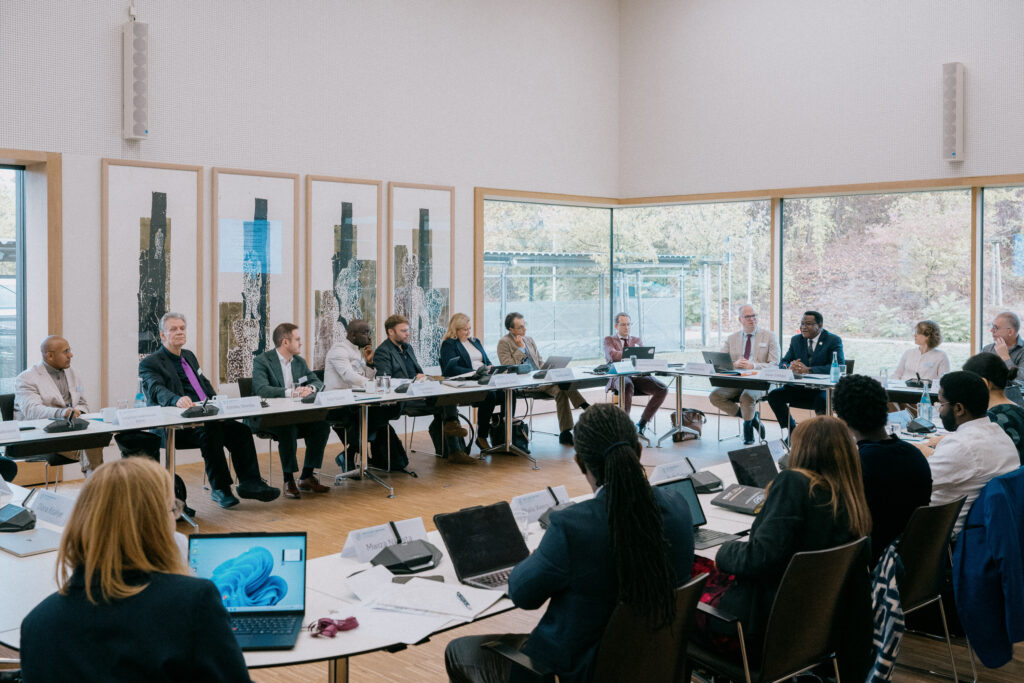
On October 14, 2026, Thalia Viveros Uehara, researcher at the Max Planck Institute for Comparative Public Law and International Law (MPIL) and member of the ICCAL team, moderated a panel at the workshop "Human Rights: Rising under Distress? The African Court at 20," held in Heidelberg. The event was organized by Helmut Aust, Matthias Goldmann and Marius Pieterse at MPIL, in cooperation with the University of the Witwatersrand, Johannesburg.
The workshop brought together members of human rights courts and bodies, researchers and practitioners to reflect on a central tension in contemporary human rights protection: while case law is broadening its reach and recognizing historically neglected forms of exclusion, the institutions charged with guaranteeing these rights face political resistance and struggle to secure compliance with their decisions. The twentieth anniversary of the African Court on Human and Peoples' Rights provided an opportunity to examine these trends and their implications for the future of regional protection.
From rights and territories to institutional relations
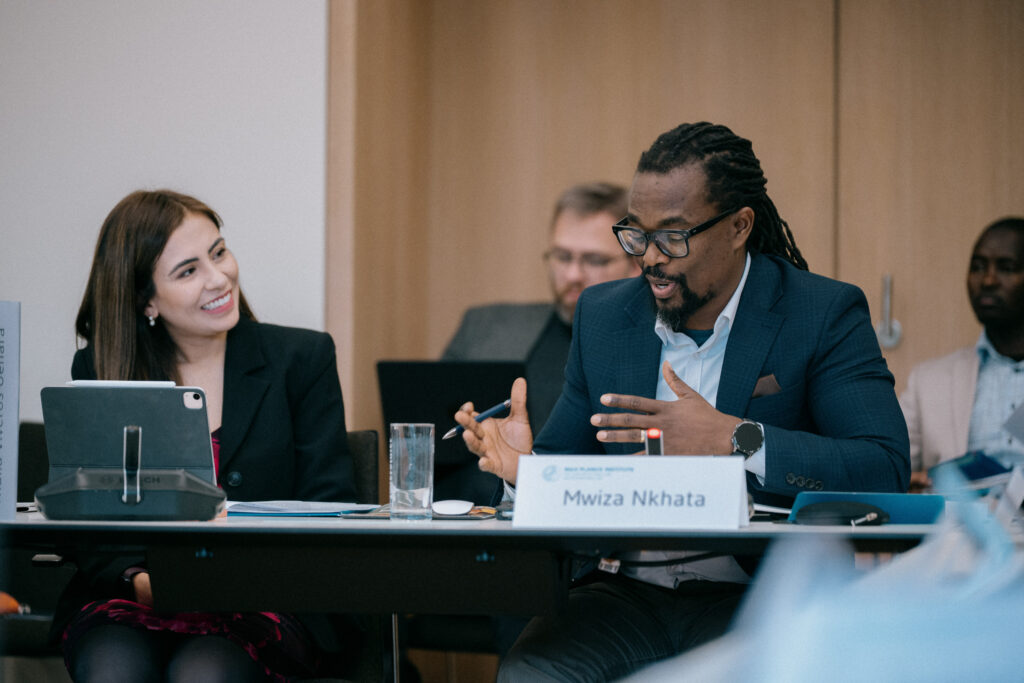
Viveros Uehara moderated the third panel, "The African Court and other regional institutions," with Mwiza Nkhata (African Court), Diana Kisakye (Friedrich-Alexander-Universität Erlangen-Nürnberg) and Frans Viljoen (University of Pretoria).
The panel built on the first two panels, which had addressed intersectionality and plurality as well as places and displacement. Those discussions highlighted overlapping forms of disadvantage, community rights and the territorial dimensions of protection. The third panel shifted the focus to the institutional relationships that shape the development of legal standards and their effective implementation.
The discussion covered the African Court’s relations with the African Commission on Human and Peoples' Rights, the African Committee of Experts on the Rights and Welfare of the Child, and United Nations human rights bodies. Institutional cooperation was examined through concrete challenges: access to justice, coordination between partially overlapping mandates, the circulation of interpretive approaches and the follow-up of judicial decisions.
The case of Kenya’s Ogiek community, referred to the Court by the Commission, illustrates the practical importance of such cooperation. It also shows that regional protection spans several stages, from the filing of claims and the recognition of rights to community participation in implementing decisions. At the same time, incorporating international standards on equality and on economic and social rights raises the challenge of adapting legal tools to different contexts while respecting the particularities of each institutional mandate.
Judicial dialogue and communities of practice: a link to ICCAL
Viveros Uehara’s participation ties in with ICCAL’s research on transformative constitutionalism, judicial dialogue and communities of practice. These perspectives help explain how rights protection takes shape and becomes effective through interaction among courts, national authorities, litigants, civil society organizations and communities, well beyond the delivery of a judgment.
Seen this way, exchange with the Inter-American System invites reflection on the conditions that favor the domestic reception of regional standards, and on the role of judicial, professional and academic networks in developing and implementing them. It also makes it possible to distinguish between citing case law from other systems, sustained institutional dialogue, and the work of those who carry legal standards into new disputes and contexts.
The African experience brings particularly relevant contributions to this conversation, among them the African Charter’s express recognition of peoples' rights, the right to development and environmental protection. These developments enrich the dialogue with the Inter-American System on collective rights, inclusion and social transformation. Comparing the two systems reveals lessons each can draw from the other, without losing sight of the differences in jurisdiction, access to justice and political context that set them apart.
Courts facing contemporary pressures
Following the fourth panel, on the African Court and domestic institutions, the day closed with the public debate "Courts at a Crossroads," held at the German-American Institute (DAI) in Heidelberg.
Speakers included Blaise Tchikaya, President of the African Court; Ann-Katrin Kaufhold, Vice-President of the German Federal Constitutional Court; and Anja Seibert-Fohr, Judge at the European Court of Human Rights. Matthias Goldmann moderated.
The discussion returned to the question at the heart of the workshop: how courts can preserve their independence and authority, strengthen institutional cooperation and contribute to the effective protection of human rights amid mounting political pressure. Marking the African Court’s twentieth anniversary was thus not only a moment to look back on its trajectory, but also an occasion to examine shared challenges and the potential for mutual learning among regional human rights systems.