29.10.2026
Morales Antoniazzi addresses climate democracy from an Inter-American perspective at international congress "Climate justice, science and rights. Challenges and horizons"
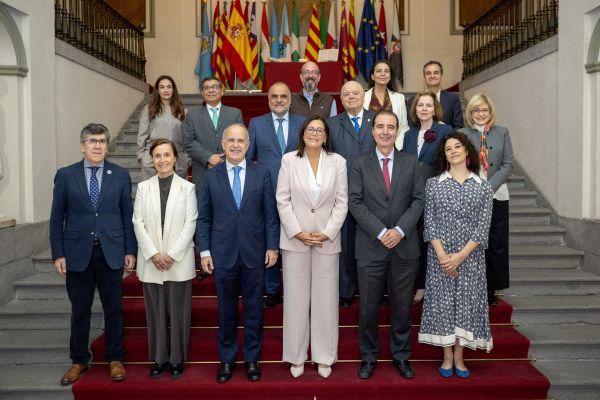
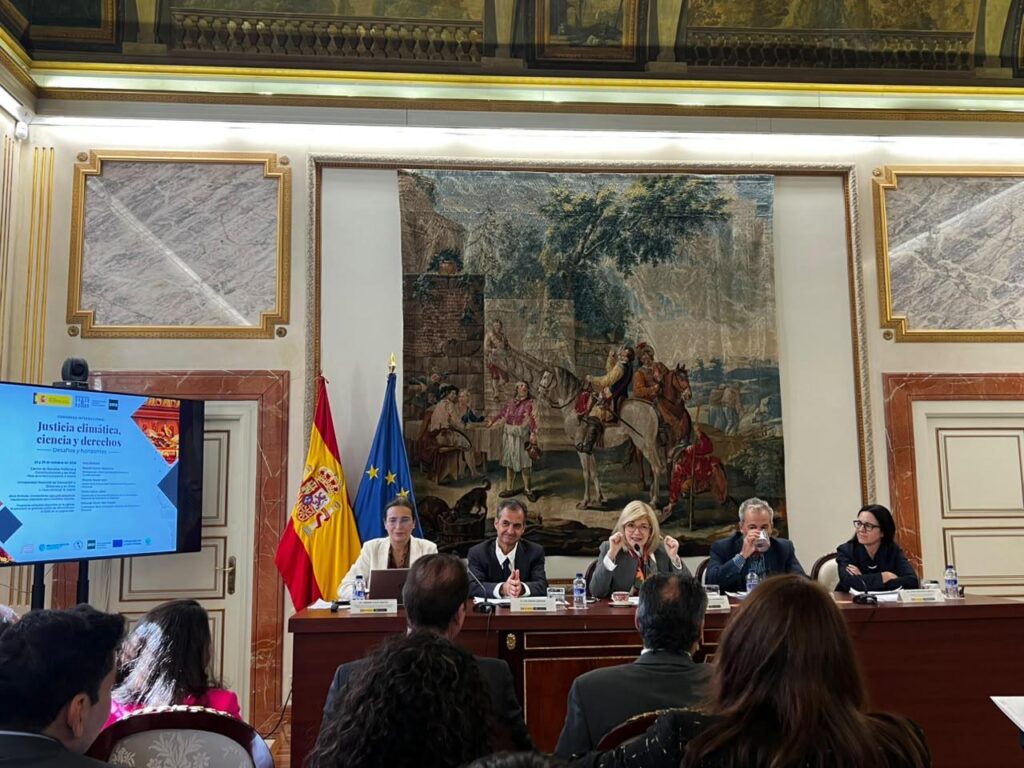
Mariela Morales Antoniazzi, coordinator of the ICCAL project at the Max Planck Institute for Comparative Public Law and International Law (MPIL), took part in the International Congress "Climate Justice, Science and Rights. Challenges and Horizons", held in Madrid on 22 and 23 October 2026. Organised by the Centre for Political and Constitutional Studies (CEPC) together with Eduardo Ferrer Mac-Gregor, researcher at the National University of Distance Education (UNED) and former President of the Inter-American Court of Human Rights (IACtHR), and co-organised by MPIL, the event brought together members of the judiciary, academia and national and international bodies. The UN Special Rapporteur on Climate Change, Elisa Morgera, warned of the global challenges at the opening, and the Special Rapporteur on the Environment, Astrid Puentes, outlined the progress made in climate litigation.
Judicial convergence on global warming
A highlight of the congress was the panel "The voice of international courts in the face of the climate emergency", which gathered, members of four international judicial bodies: Rodrigo Mudrovitsch, President of the IACtHR; Síofra O’Leary, former President of the European Court of Human Rights; Frida M. Armas Pfirter, judge at the International Tribunal for the Law of the Sea; and Leonardo Nemer Caldeira Brant, judge at the International Court of Justice. Under different mandates and legal regimes, all four have examined international obligations to protect against global warming, and they show a partial convergence on prevention, due diligence, cooperation, reliance on scientific knowledge and judicial guarantees.
Vulnerability, participation and resilience
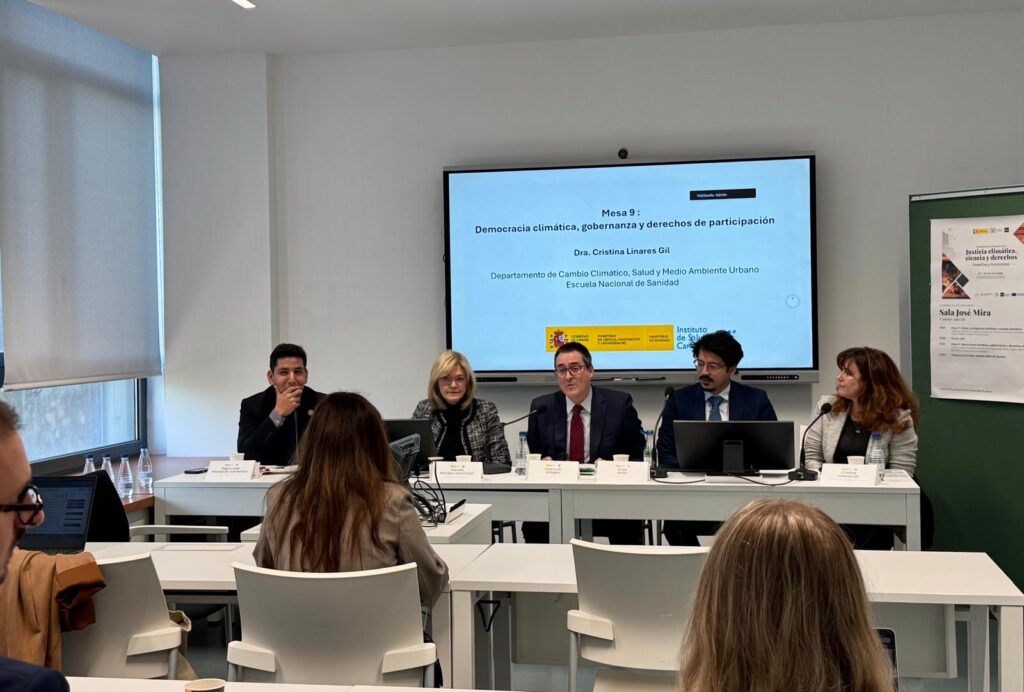
On the event’s first day, Morales Antoniazzi chaired the panel "Vulnerable groups and climate change" with Leyre Burguera Ameave (UNED), Carmen Plaza Martín (Complutense University of Madrid), Rafael de Asís (Carlos III University of Madrid) and Luis Jimena Quesada (University of Valencia). The following day, on the panel "Climate democracy, governance and participation rights", moderated by José Luis Villegas (ICADE) and shared with Cristina Linares Gil (Carlos III Health Institute), Ecab Amor (IE Business School) and Digno José Montalbán (CEPC), she presented "From climate democracy to climate resilience: building an ius commune from the Inter-American Democratic Charter to IACtHR Advisory Opinion OC-32″. Her talk followed three axes: the shaping of a common legal order in this field under the instrument adopted by the OAS in 2001, its gradual expansion through the Escazú Agreement, and the two-way link between democratic governance and adaptive capacity set out in Advisory Opinion OC-32/25.