09.11.2026
Mariela Morales Antoniazzi delivers opening keynote at the II Jornadas Nacionales de Investigación en Derechos Humanos in Chile
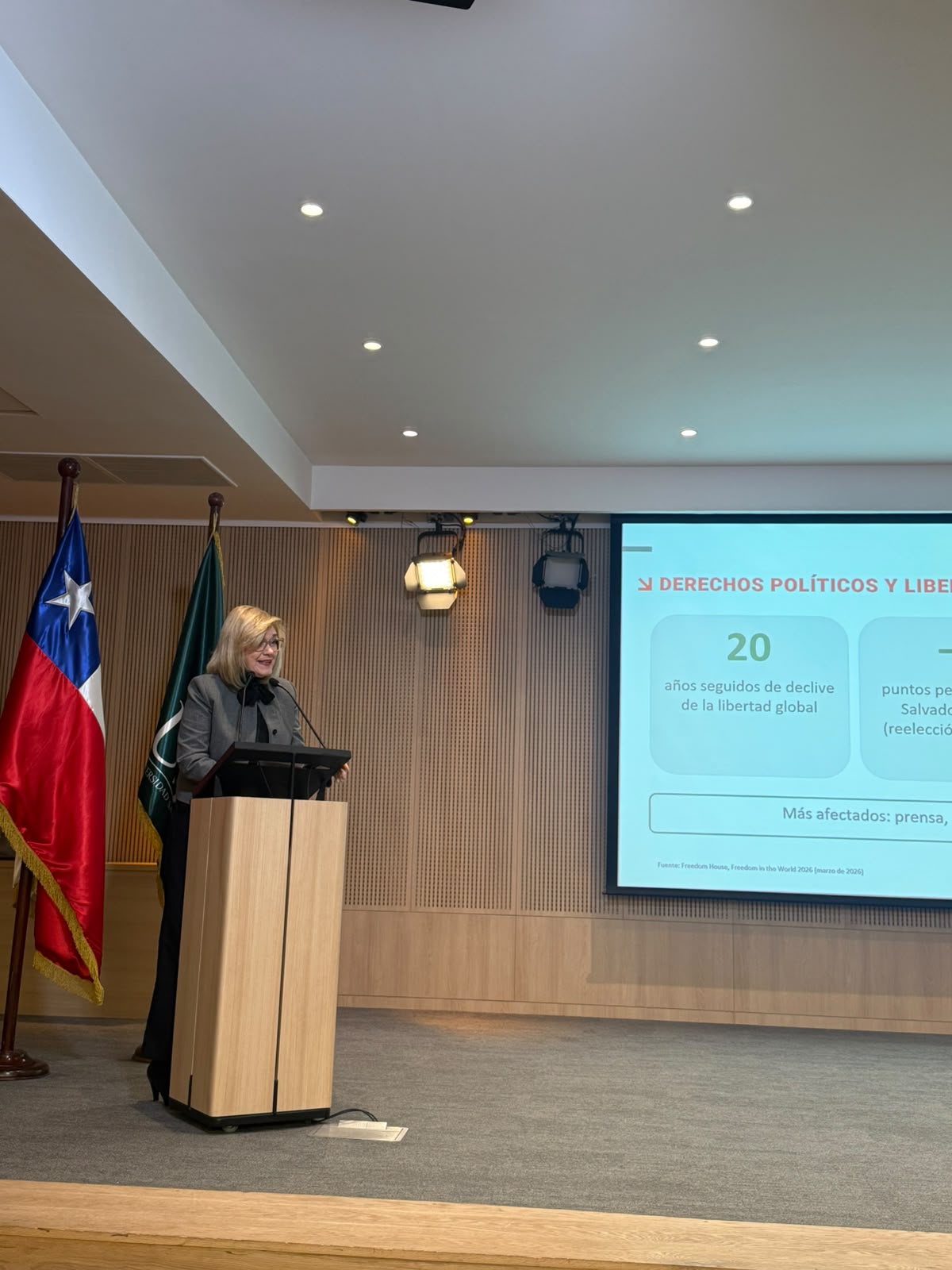
With funding from the German Academic Exchange Service (DAAD), Mariela Morales Antoniazzi, coordinator of the ICCAL project at the Max Planck Institute for Comparative Public Law and International Law (MPIL), delivered the opening keynote titled "25 years of the Inter-American Democratic Charter: Standards and challenges" at the II Jornadas Nacionales de Investigación en Derechos Humanos in Santiago de Chile. Held on 9 and 10 November at the Faculty of Law of Universidad Santo Tomás, the event brought together scholars from Chile and across the region to discuss current challenges in human rights protection.
It was supported by a consortium of universities, among them Universidad de Chile, Universidad Alberto Hurtado, Universidad Academia de Humanismo Cristiano, Universidad Austral de Chile, Universidad de Concepción and Universidad Central, together with the Círculo de Estudios de Derecho Internacional de los Derechos Humanos (CEDIDH), and organised in collaboration with Chile’s National Human Rights Institute (INDH).
Following welcoming remarks by Dean Aníbal Rodríguez Letelier and by Liliana Ronconi on behalf of the organising committee, Morales Antoniazzi launched the academic programme by tracing the genesis of the Inter-American Democratic Charter, adopted in Lima on 11 September 2001. She emphasised a paradigm shift: originally conceived as a political instrument, the Charter has become, through the decisions of the Inter-American Court of Human Rights, a legal benchmark for interpretation.
Drawing on recent indices of democratic quality in Latin America and the Caribbean, she examined institutional erosion pursued through formally legal means and presented the Inter-American democratic test, a doctrinal approach she has advanced since 2015 within the framework of Ius Constitutionale Commune in Latin America. She underlined judicial independence as a structural safeguard and reviewed case-law standards on indefinite re-election, electoral integrity, and economic, social, cultural and environmental rights (ESCER). She closed with a call to strengthen collective guarantee in response to non-compliance with judgments, with an eye to Opinión Consultiva 33 on democracy as a human right.
Parallel working-group sessions covered a broad set of themes: the rule of law and conventionality control, Indigenous peoples and legal pluralism, migration and border governance, ESCER, persons deprived of liberty, disability, children’s rights, technology and artificial intelligence, Inter-American case law and reparations, as well as gender-based violence and gender identity.
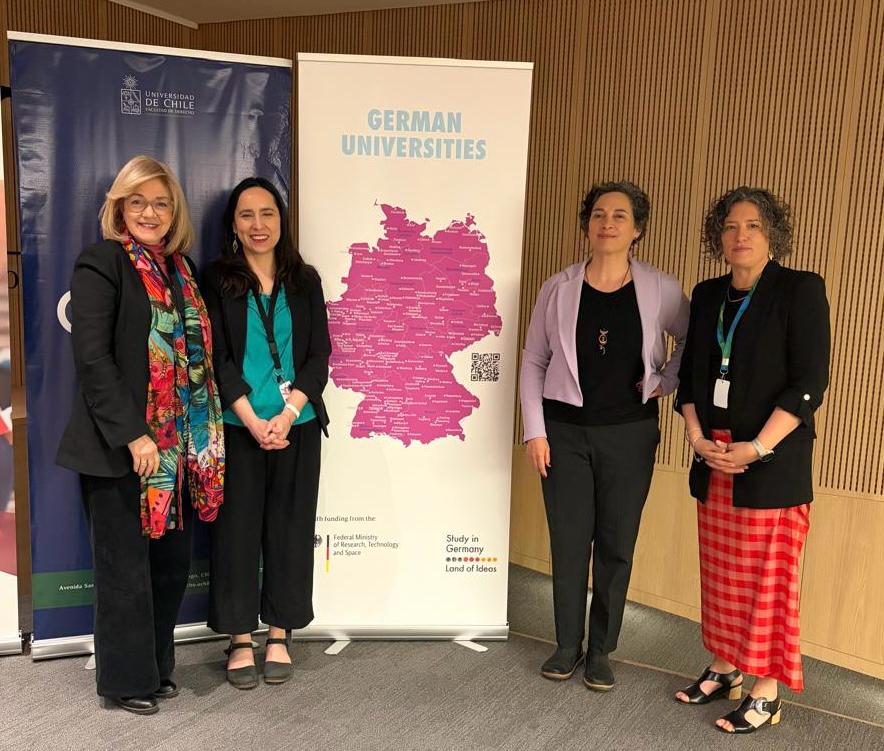
A particular highlight was the presentation by Andrea Riedemann, Director of the DAAD Information Centre in Santiago de Chile, on the wide range of individual and institutional cooperation and scholarship programmes that have fostered academic exchange between Chile and Germany since 1999. Her contribution gave an audience specialised in human rights valuable insight into the German higher education system and into opportunities for study and research in Germany.