04.08.2026
XIII ICCAL International Seminar: Transformative Constitutionalism and its Impact on Latin America
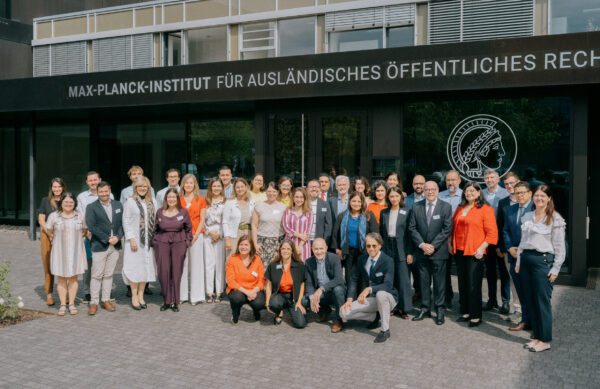
The Max Planck Institute for Comparative Public Law and International Law hosted, on August 3 and 4, the 13th International Seminar on Transformative Constitutionalism and its Impact in Latin America, organized together with the Konrad-Adenauer-Stiftung (Programa Estado de Derecho para Latinoamérica) and the Inter-American Court of Human Rights. Over two days, scholars, judges, and experts from the region came together to examine, across seven panels, the current challenges facing the protection of human rights, democracy, and the rule of law in Latin America and Europe. Opening remarks were delivered by Armin von Bogdandy (MPIL) and Susann Aboueldahab (KAS).
Day one: human rights, constitutional justice, business, and the view from Europe
The first day was organized around four panels that drew on the concepts developed by the Ius Constitutionale Commune in Latin America (ICCAL) to examine the current state of human rights protection, democracy, and the rule of law in Latin America and Europe.
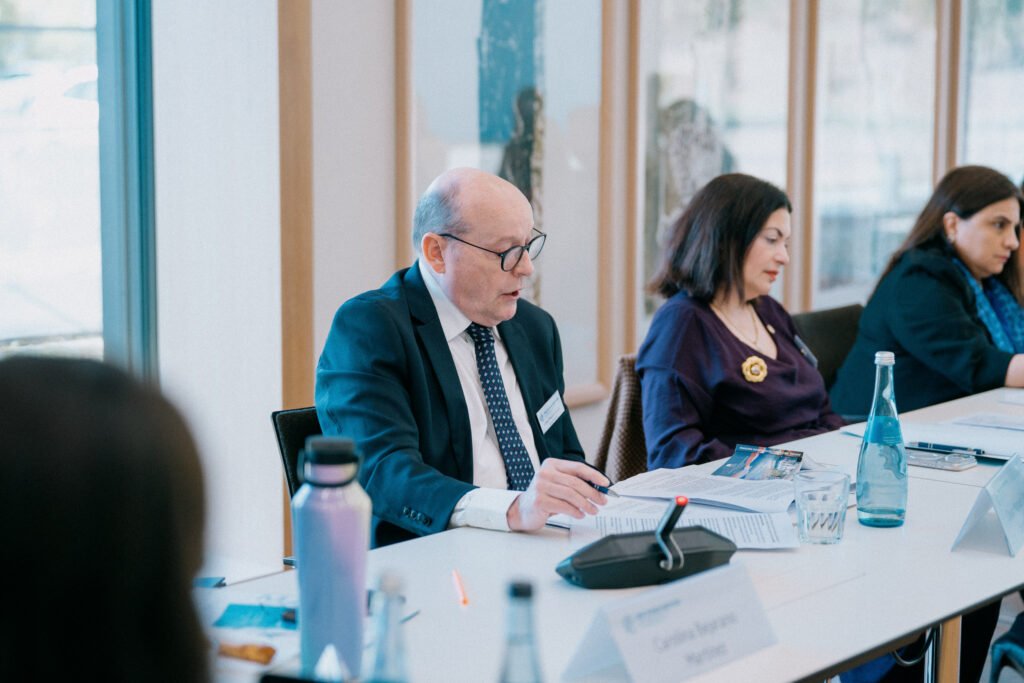
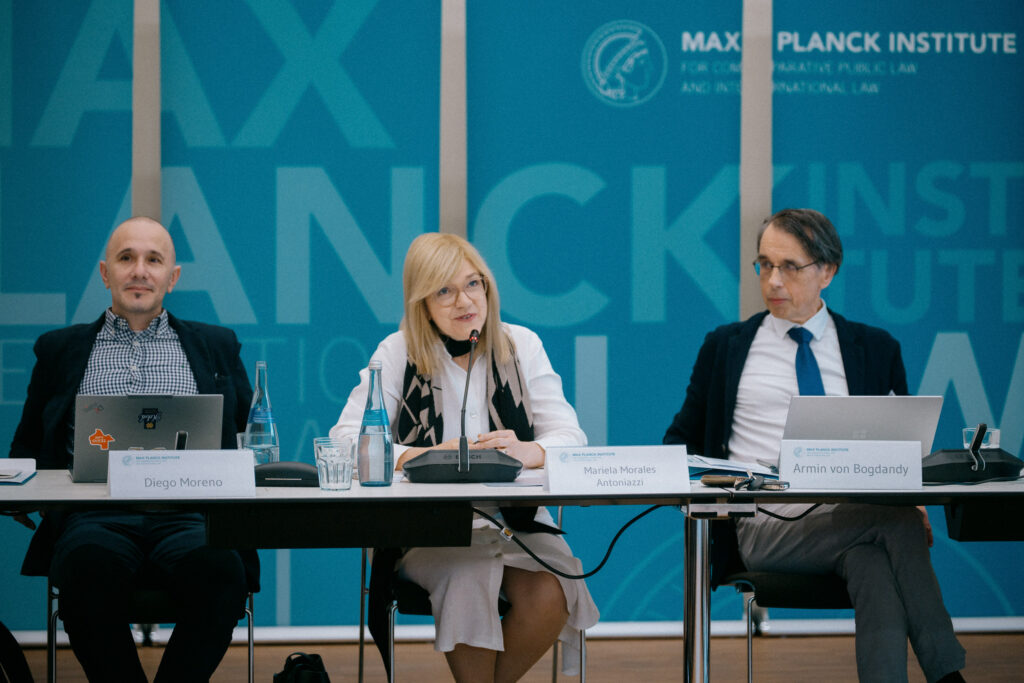
- Panel 1 – The Transformative Impact of Human Rights in Latin America, with Armin von Bogdandy, Mariela Morales Antoniazzi, and Carolina Bejarano Martínez (MPIL), and Inter-American Court of Human Rights judge Diego Moreno.
- Panel 2 – The Transformative Impact of Constitutional Justice, which brought together a panel of court presidents and justices from the region: Paola Meneses Mosquera (president of the Constitutional Court of Colombia), María Cristina Chen Stanziola (president of the Supreme Court of Justice of Panama), María Pía Silva (president of the Constitutional Court of Chile), and César Manuel Diesel Junghanns and María Carolina Llanes Ocampos, justices of the Supreme Court of Justice of Paraguay.
- Panel 3 – The Transformative Impact on Business, with Miguel Barboza (KAS), Danielle Pamplona (PUC-Paraná), and Thalia Viveros (MPIL).
- Panel 4 – The Transformative Impact in Light of Europe, with Ángel Rodríguez (University of Málaga), Juan Ruíz Ramos (University of Granada), Daniel González (University of Salamanca), and Vanessa Vanegas (MPIL).
Through an interdisciplinary, comparative, and multilevel lens, the discussions made it possible to recognize the progress achieved since the development of the ICCAL framework, identify new opportunities to strengthen the transformative capacity of the law, and propose innovative responses to the contemporary challenges facing democracy and human rights.
Day two: national agendas, conflict, peace, and transitional justice
The second day once again brought together the ICCAL community to reflect on the concrete effects of transformative constitutionalism across different areas of institutional and social life, over three additional panels.
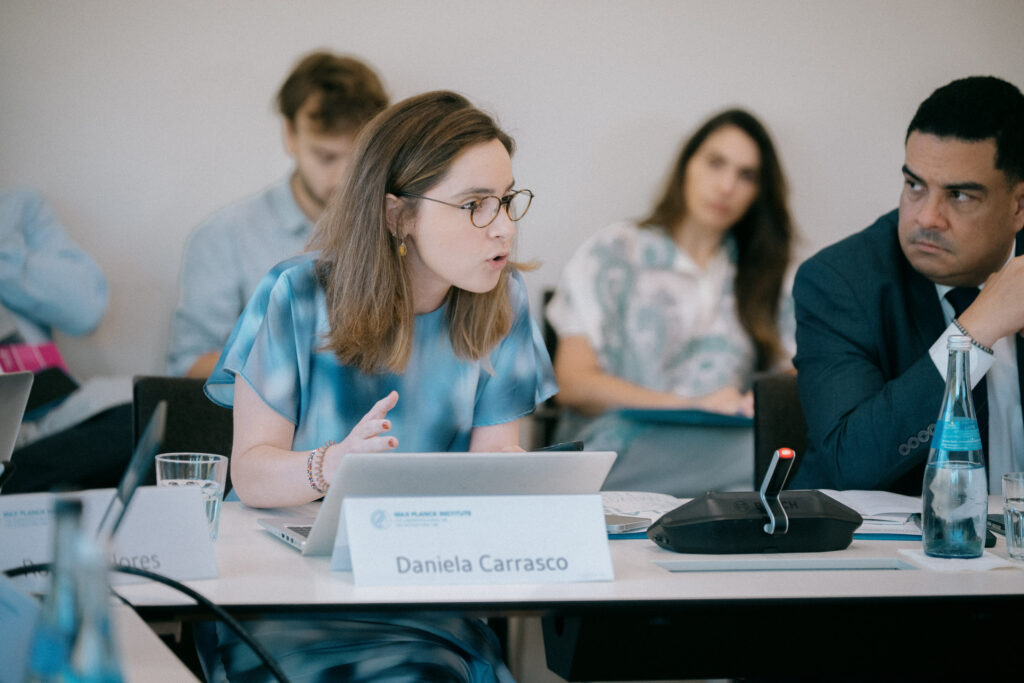
- Panel 5 – The Transformative Impact on National Agendas, with Jesús María Casal (Department of Comparative Law, UCAB), Daniela Carrasco (Ibero México), Etéreo Armando Medina Marín (Supreme Court of Justice of Panama), and Rogelio Flores (Institute of Constitutional Studies of Querétaro).
- Panel 6 – The Transformative Impact on Conflict, Peace, and Transitional Justice, with Clara Sandoval (University of Essex), Eduardo Trujillo (Human Rights Center, UCAB), Selene Soto (independent expert), and Daniela Salazar (Universidad San Francisco de Quito).
- Panel 7 – The Transformative Impact in the Current Context: Challenges, with Andrea Castagnola (Universidad Torcuato di Tella), Miriam Henríquez (Universidad Alberto Hurtado), and Rodolfo Arango, a justice on the Special Jurisdiction for Peace (JEP).
From comparative and multidisciplinary perspectives, the presentations underscored the importance of strengthening dialogue among academia, public institutions, and civil society to build innovative responses to the contemporary challenges facing democracy, human rights, and the rule of law.
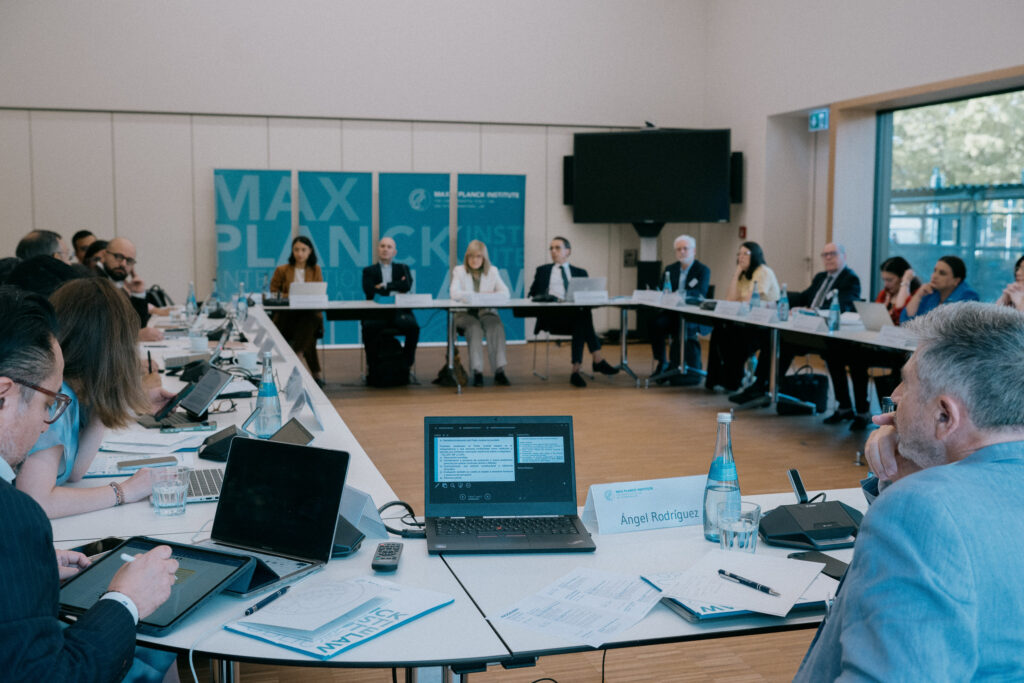
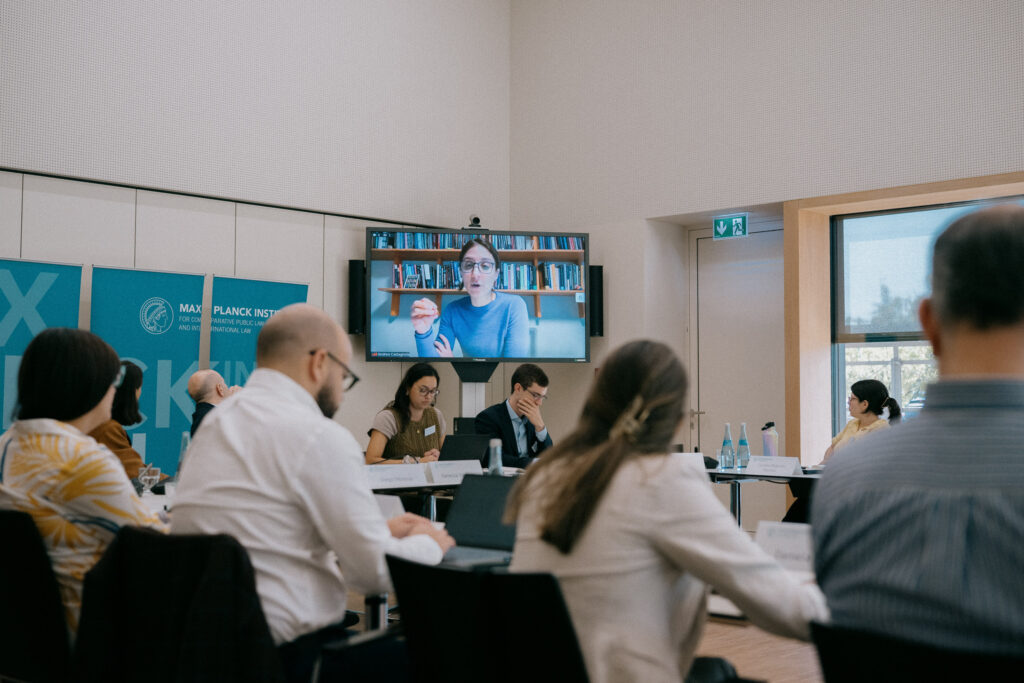
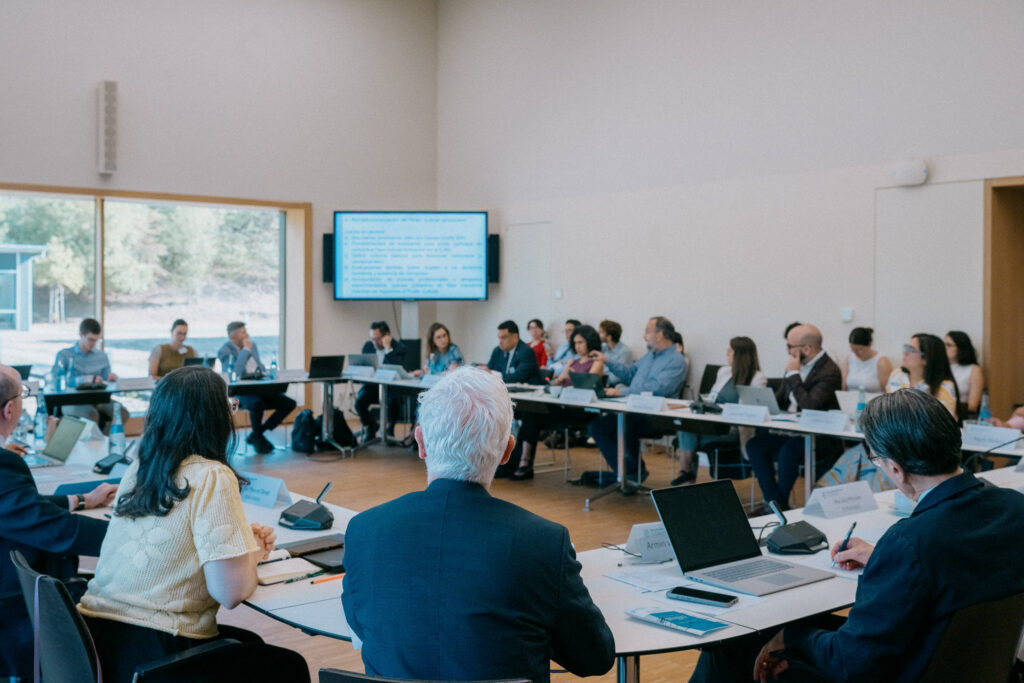
A space for horizontal exchange within the ICCAL community
As in previous editions, the seminar sought to foster a horizontal dialogue, identify the impacts of transformative constitutionalism, and reflect on how the region’s society can continue contributing to the construction of common standards. The seven panels reaffirmed the seminar’s value as a space for collective knowledge-building, aimed at strengthening a community committed to advancing the Ius Constitutionale Commune in Latin America.