20 August 2026
Hantavirus, Earthquakes, and a collapsed Healthcare System
This blog post was translated from the original Spanish version by using AI tools.
If you encounter any errors, please contact us.
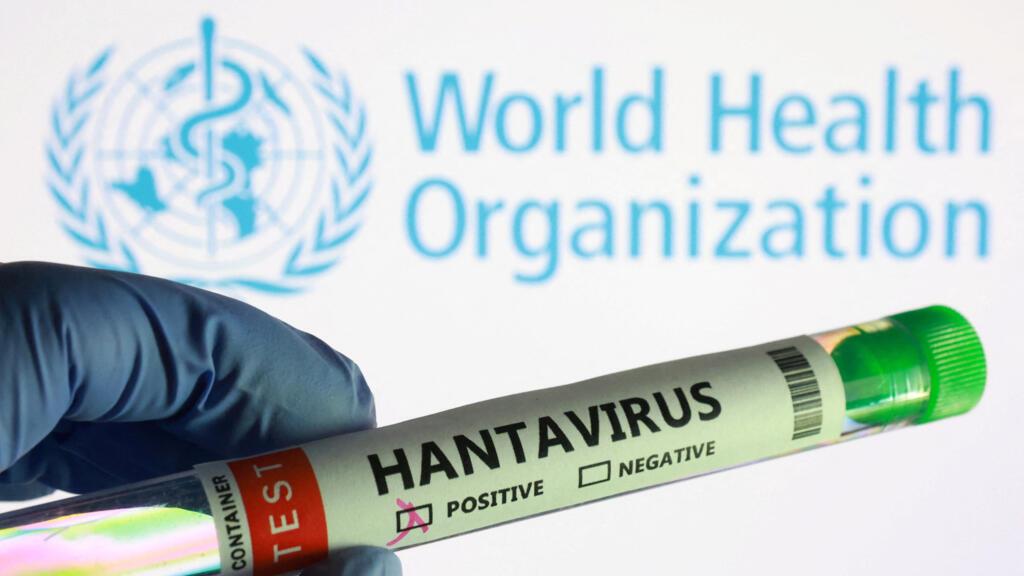
In July, the Venezuelan Ministry of Health confirmed three deaths from hantavirus in Anzoátegui state, all from the same family who had been exposed at a rural farm. It also reported two additional deaths among medical personnel in Barinas—a regional epidemiologist, a doctor, a nurse, and a priest are among the suspected cases—whose cause is still under investigation. The government insists that there is no evidence of person-to-person transmission and that the outbreak is contained. In contrast, the Venezuelan Medical Federation maintains that the actual number of cases is higher and that official statistics do not reflect the true scale of the problem.
Various epidemiologists have been warning about this for weeks on social media: the hantavirus is not the new COVID-19; its risk of widespread transmission is low because the strains identified in the region rarely spread from person to person. Therefore, the concern is not the virus itself, but rather the system that is supposed to contain it.
PROVEA’s “Right to Health 2025” report, published just weeks before this outbreak, describes a healthcare system operating at barely 20% of its available capacity and having lost nearly 80% of its care capacity due to the structural collapse that has been ongoing since 2016. In 2025, 94,056 complaints of violations of the right to health were recorded—the fifth consecutive year at historic highs—more than half of them due to a lack of trained personnel, basic supplies, and equipment. Data from HumVenezuela cited in the same report show that 94.6% of the population depends almost exclusively on the public system—a system that, according to its own users, lacks supplies in 88.5% of cases and medications in 89.8%.
That is the system that must now set up an “epidemiological cordon” in Anzoátegui state, identify contacts, confirm diagnoses through laboratory testing, and transparently report its findings. PROVEA’s own report documents that Venezuela went more than a decade without publishing regular epidemiological bulletins. A country that conceals or fails to produce basic health data cannot, at the same time, guarantee reliable epidemiological surveillance against a pathogen that is transmitted through the inhalation of particles from infected rodents and which, in its most severe variants, can kill up to 40% of those who contract it.
Compounding all of this is a context that exacerbates the situation: the earthquakes in late June 2026 left more than 5,200 dead and further weakened an already battered hospital infrastructure, just when rapid response capabilities are most needed. The exodus of medical personnel—which PROVEA’s own report documents as a sustained brain drain over the years—further reduces the capacity to detect cases early in rural areas, which is precisely where the virus is circulating.
This healthcare collapse is neither an isolated nor a recent phenomenon: it is merely the latest chapter in what UN agencies and a network of humanitarian organizations have classified for more than half a decade as a Complex Humanitarian Emergency in Venezuela. Human Rights Watch’s 2025 World Report, citing the independent civil society platform HumVenezuela, notes that 14.2 million people were facing critical needs and that hunger affected 5.1 million Venezuelans, while nearly 28.4% of the country’s pharmacies lacked essential medications. HumVenezuela itself, in its sixth annual report monitoring this emergency, describes a “stagnant crisis”, since although nearly 500,000 people managed to escape severe need due to a slight uptick in income, another 900,000 fell into that same condition, in a country where, according to HumVenezuela’s 2024 figures, 86.9% of the population lived in income-based poverty. Given these circumstances, it is on this ground—already fractured in terms of food, water, electricity, and access to medicines—that the response to the hantavirus must now also be mounted.
This reality should compel us to rethink what it means, in practice, for a right to be “guaranteed.” On paper, Venezuela has one of the most generous constitutions in the region regarding health care: it defines it as a human and social right, an obligation of the State, with services that must be “free, universal, comprehensive, equitable, and based on solidarity”. None of that has prevented 94,056 people from reporting violations of that right in a single year, or a hantavirus outbreak from encountering a system incapable of confirming its own diagnoses in a timely manner.
The lesson is uncomfortable but inescapable: a social right without a budget is not a right—it is an aspiration. The law establishes entitlement, but it is public spending on supplies, personnel, laboratories, and epidemiological surveillance that transforms that entitlement into a real and enforceable benefit. When the health budget is cut by 28% in a single year—as happened in Venezuela in 2025—and declines for the third consecutive year, the practical possibility of that right existing beyond the constitutional text is dismantled. No government plan, no matter how ambitious its wording, can replace the most basic question of public policy: Are there sufficient, sustained, and well-managed resources for this to work?
The Venezuelan case is a stark example of how, when the health budget becomes the residual amount left over after other public spending priorities, the first thing to be lost is the capacity to respond to the unpredictable: a hantavirus outbreak, an earthquake, or a measles epidemic. At the same time, something else is lost—more slowly but more profoundly—and that is the possibility that health will remain an enforceable right rather than a privilege subject to each family’s budget. This is how, under a government that prides itself on being popular, having a socioeconomic advantage has become the only way to access the health care system.
That is why any discussion of a potential transition in Venezuela that does not place social rights at the center runs the risk of repeating the same mistake: treating health, food, or water as secondary issues that “will be resolved” once the macroeconomy or politics have stabilized. We do not mean to suggest that the economy and politics should not be central to a country’s reconstruction, but the mistake of failing to simultaneously guarantee social rights jeopardizes people’s quality of life—as well as their very lives. The Venezuelan experience illustrates how a change in government, on its own, does not repair a hospital system, nor does it stock it with supplies, much less restore an epidemiological network that lacks data or bring back medical personnel who have already emigrated. Rebuilding these capacities takes years and requires the state to once again assume its role as the guarantor—and not merely a bystander—of its citizens’ well-being. A protective state is not one that merely promises rights in its constitution, but one that sustains—through funding, personnel, and transparency—the capacity to exercise those rights every day, including on days when there is no earthquake or outbreak forcing it to react. That is, ultimately, the standard by which any political project aspiring to govern during the democratic transition should be measured.
.
Adriana Torres, Hantavirus, Earthquakes, and a collapsed Healthcare System, 20 August 2026, ICCAL Blog, https://iccal.lat/en/blog/venezuela-healthcare-collapse-hantavirus/
Authors