13.10.2025
Ibero-American Colloquium No. 331: UNAM and Its Internationalization
William Lee presented in Heidelberg UNAM’s international strategy, highlighting its autonomy, scientific leadership, and the opening of a new regional center in Chile.
13 October 2025, MPIL Heidelberg
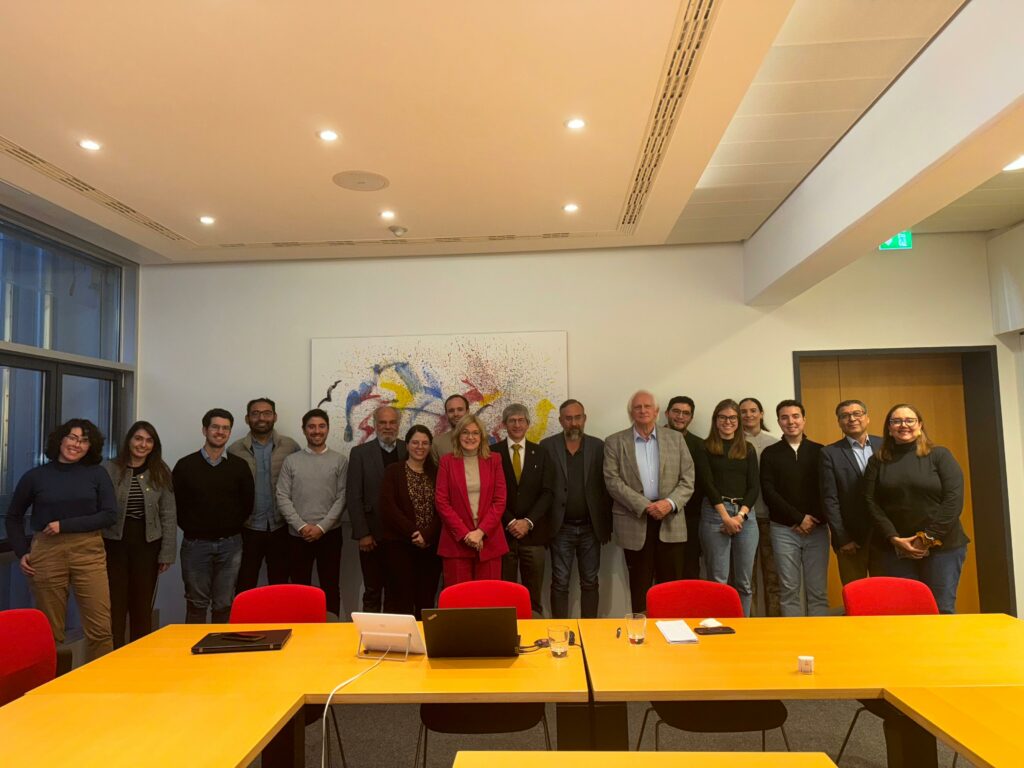
The Ibero-American Colloquium No. 331, held at the Max Planck Institute for Comparative Public Law and International Law, featured Professor William Lee, Director of International Relations at the National Autonomous University of Mexico (UNAM). His presentation on UNAM’s internationalization offered a detailed look at one of the most significant academic institutions in Latin America and its evolving role in the global academic landscape.
Lee began by reflecting on the university’s long history. Founded in the sixteenth century and reestablished in 1910, UNAM achieved full autonomy in 1929 — a milestone that redefined the relationship between the state, knowledge, and society. As Lee explained, autonomy is not merely an administrative principle but the foundation that ensures academic freedom and public responsibility.
From there, he described UNAM as a dynamic and decentralized network extending far beyond Mexico City. Today, it encompasses over thirty research institutes and centers, multiple schools across the country, and a community of more than four hundred thousand students, researchers, and staff. Beyond teaching and research, UNAM also manages national public services such as the Seismological Service, the National Library, and the National Newspaper Archive, reaffirming its central role in Mexico’s scientific and cultural life.
Lee presented the university’s Institutional Development Plan 2023–2027, emphasizing inclusion, sustainability, gender equity, and innovation as guiding principles. He highlighted UNAM’s mission to strengthen academic life while expanding its social impact, reminding the audience that knowledge fulfills its public purpose only when it transforms the realities of the societies it serves.
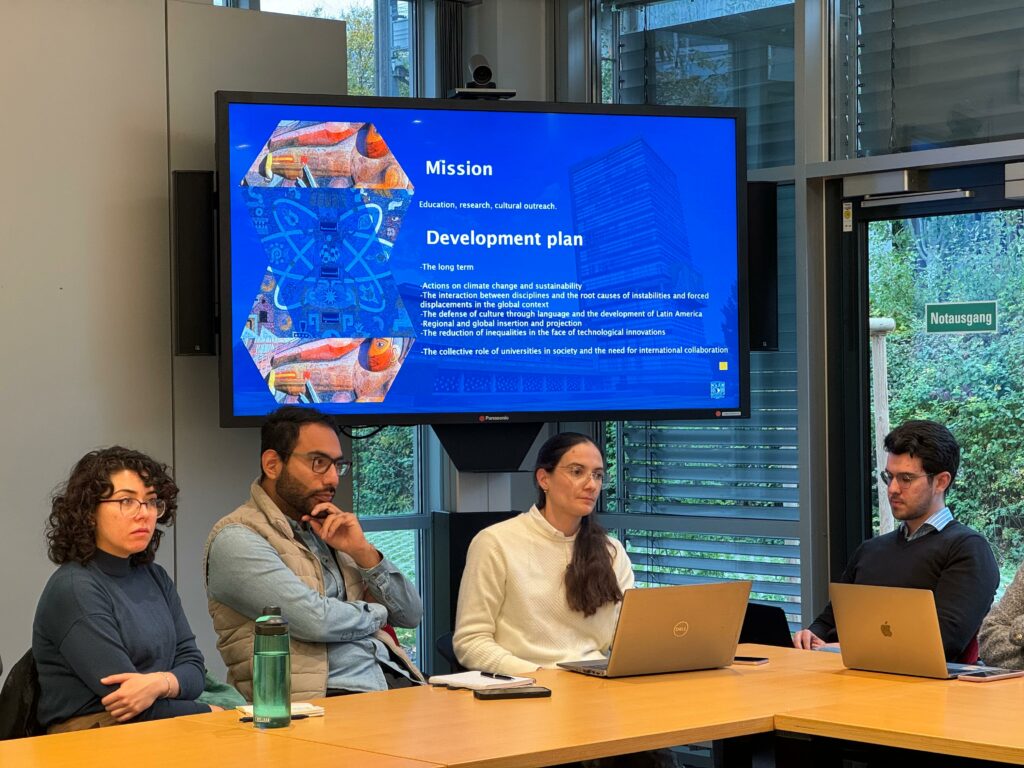
A key focus of the presentation was UNAM’s international strategy. Lee explained that the university has built an extensive global network of offices designed to foster academic and cultural cooperation. With presences in San Antonio, Chicago, Paris, London, Berlin, and Gatineau, these centers promote student exchanges, research partnerships, and cultural outreach. The most recent office, opened in Santiago de Chile in partnership with the University of Chile, serves as UNAM’s regional hub for Latin America, reinforcing a shared Ibero-American vision.
During the discussion, participants addressed issues such as the defense of Spanish as a scientific language, the challenges of funding public universities, and the importance of cooperation between regions to address global challenges. Lee emphasized that internationalization is not about expansion for its own sake, but about building lasting partnerships based on trust and reciprocity.
The session concluded with a reflection on the role of public universities in protecting intellectual autonomy and advancing socially engaged knowledge. Through its scale, history, and international reach, UNAM was portrayed as an institution that bridges continents while embodying the ideals of critical thought, academic freedom, and collective responsibility.