This project examines how external geopolitical pressures shaped by rivalries among powers such as the United States, China, and Russia affect democratic resilience and the regional protection of human rights in Europe and Latin America. It asks whether there is a geopolitical dimension to transformative constitutionalism (TC) and explores how TC can provide tools to navigate a shifting international order. The research focuses particularly on the influence of geopolitics on national courts, analyzing how historical asymmetries and strategies of mobilization, litigation, and governance can strengthen democratic resilience against external threats that redefine spheres of influence and test the autonomy of high constitutional courts in both regions.
Researchers
- René Urueña
- Irene Vázquez Serrano
- Ignacio G. Perotti
- Sué González Hauck
- Daniel R. Quiroga-Villamarín
Focus
Geopolitics
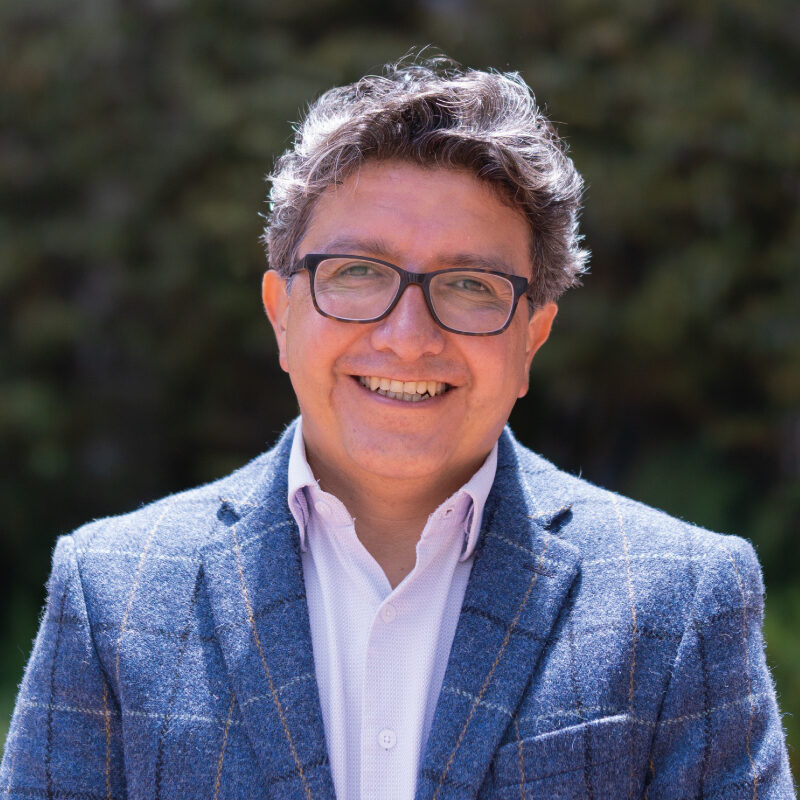
René Urueña
René Urueña is Professor of Law at Universidad de los Andes (Colombia), Max Planck Fellow, and holder of the WTO Chair in Colombia. He has served as lawyer and expert witness before the Inter-American Court of Human Rights, Special Advisor on Complementarity to the Prosecutor of the International Criminal Court, advisor to the selection committee of Colombia’s Special Jurisdiction for Peace, and President of the Colombian Academy of International Law. He has been a researcher at New York University, taught at Harvard Law School’s Institute for Global Law and Policy, and held academic positions at universities in New York, Tel Aviv, Lima, Utah, Vienna, Lapland, and Helsinki. He earned his LL.M. (laudatur) and PhD in Law (eximia cum laude) from the University of Helsinki, and holds a Law degree and postgraduate studies in Economics from Universidad de los Andes.

Irene Vázquez Serrano
Ignacio G. Perotti Pinciroli is Assistant Professor of International Law and Human Rights and Director of the Master’s in Human Rights at Universidad Europea de Madrid. He is also a member of the Max Planck Law Fellow Group Communities of Practice and the Transnational Production of Human Rights Knowledge in Latin America, coordinated by René Urueña. He holds a PhD in Law, Governance and Public Policy from Universidad Autónoma de Madrid, two LLMs from the same university, and degrees in Law and Criminal Law from Universidad Nacional de Cuyo (Argentina). His research focuses on international law, human rights, the Inter-American Human Rights System, and transitional justice. Before academia, he worked nearly a decade as a legal officer and court clerk in cases concerning crimes against humanity committed during Argentina’s last dictatorship.
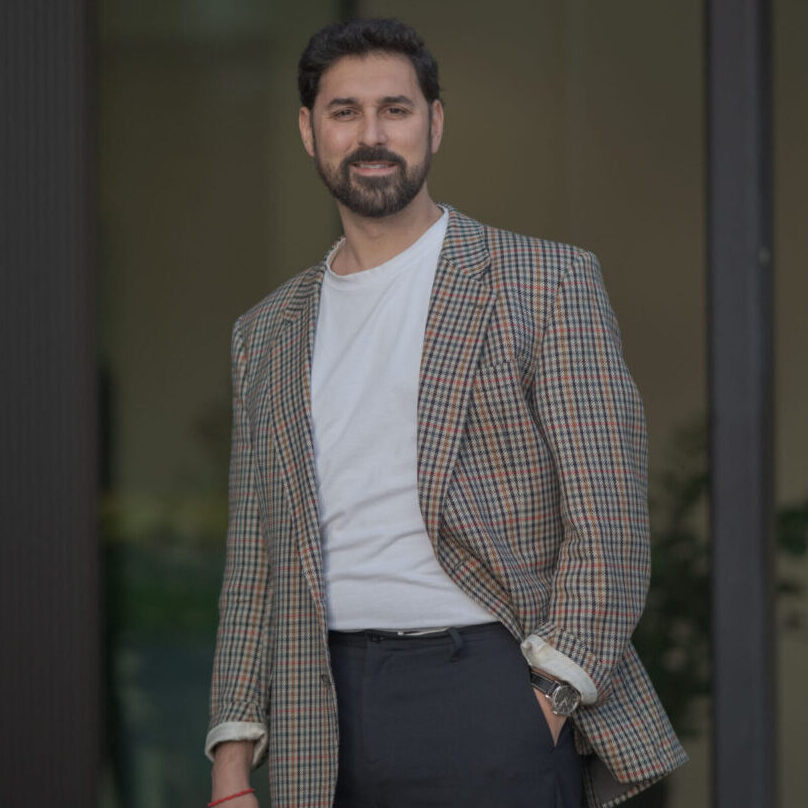
Ignacio G. Perotti Pinciroli
Ignacio G. Perotti Pinciroli is an accredited Associate Professor (PhD) of International Law and Human Rights and serves as Director of the Master’s Programme in Human Rights at the Universidad Europea de Madrid. He is also a member of the Max Planck Law Fellow group Communities of Practice and the Transnational Production of Human Rights Knowledge in Latin America, coordinated by René Urueña.
He holds a PhD in Law, Government and Public Policy from the Autonomous University of Madrid, as well as two Master’s degrees in Law from the same institution. He earned his Law degree and a Master’s in Criminal Law from the National University of Cuyo (Argentina).
His research focuses on international law, human rights and foreign relations, the Inter-American Human Rights System, and transitional justice. Before entering academia, he worked for nearly a decade as a judicial officer and court secretary on cases involving crimes against humanity committed during Argentina’s last military dictatorship.
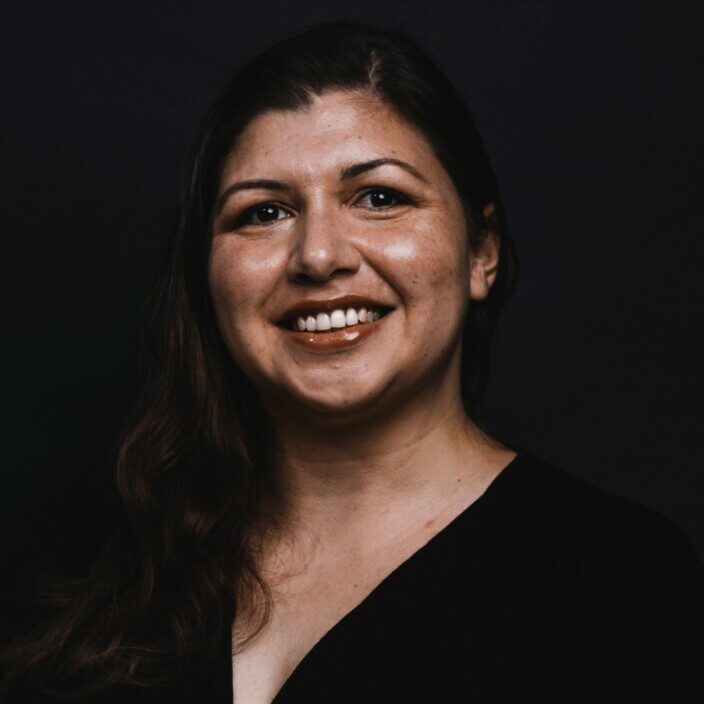
Sué González Hauck
Sué González Hauck is a Postdoctoral Researcher in Law at the Helmut-Schmidt-Universität / Universität der Bundeswehr Hamburg (Germany). She holds law degrees from the Universities of Heidelberg (Germany) and Strasbourg (France) and a doctorate from the University of St. Gallen (Switzerland). She co-edited the first open access, English-language public international law textbook (Public International Law: A Multi-Perspective Approach, 2025). Her research lies at the intersection of international law, European law, and critical theory, with a particular focus on global inequality, racial capitalism, and the epistemologies of legal scholarship. She is currently working on a habilitation project on racial capitalism and European law.
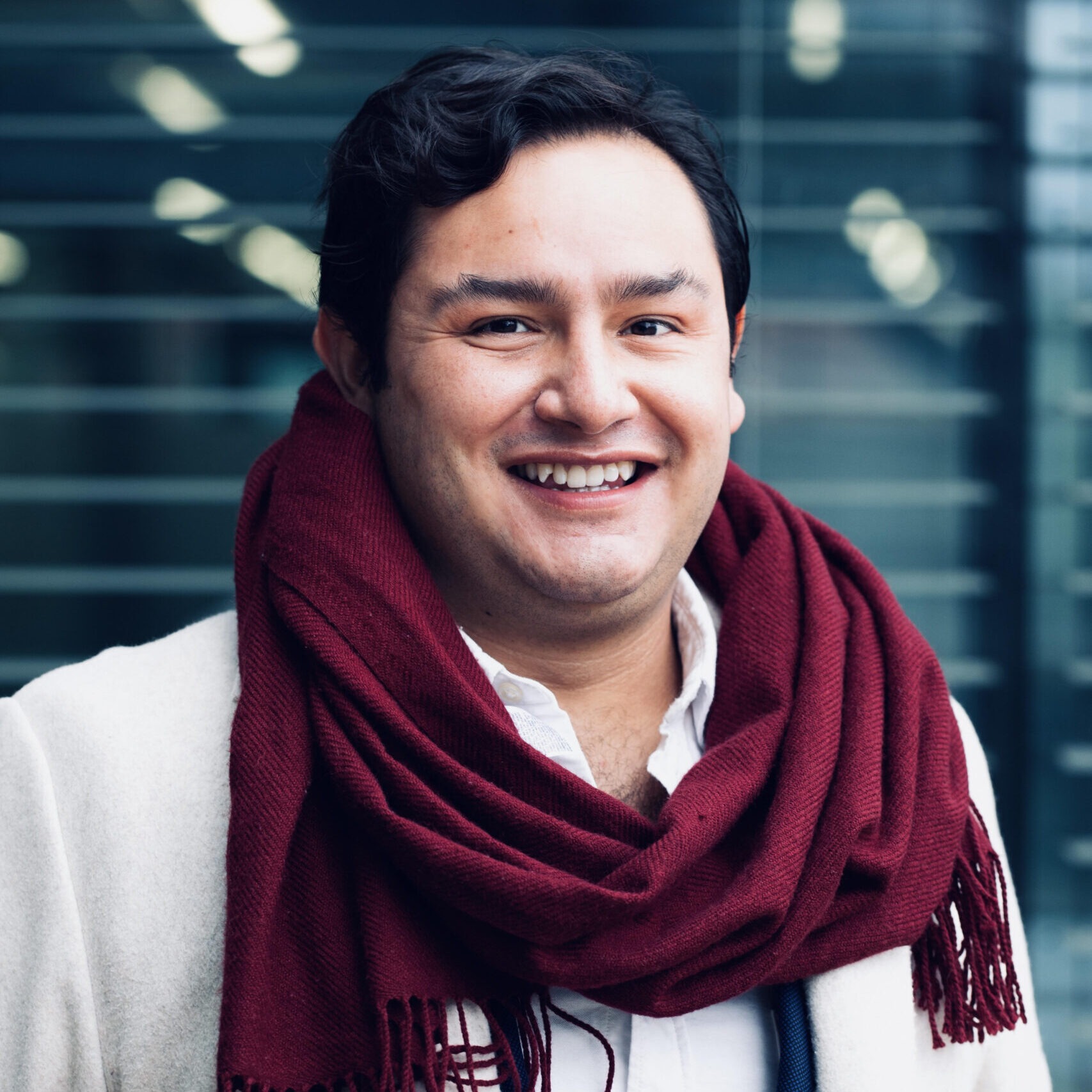
Daniel R. Quiroga-Villamarín
Daniel R. Quiroga-Villamarín is a Hauser/Remarque Global Fellow in International Law and European History at New York University and Managing Editor of the Journal of the History of International Law. He holds a BA in Law from Universidad de los Andes (Colombia), an MA in International Law from the Graduate Institute of Geneva (awarded the Mariano Garcia Rubio Prize for best dissertation), and a PhD in International Law with a minor in International History & Politics from the same institution (summa cum laude avec les félicitations du jury). He has been supported by Swiss National Science Foundation grants and is preparing his habilitation in Legal and Constitutional History at the University of Vienna.
Introductory readings
- Urueña, R. (2025). Technoscientific Thought and International Law in Latin America. In S. Puig, A. Huneeus, & A. Chehtman (Eds.), Latin American International Law in the Twenty-First Century. Oxford University Press.
- Urueña, R. (2025). “¿Ver todo el mal? Subsidiariedad y el papel epistémico de la adjudicación en el derecho internacional de los derechos humanos en América Latina.” In S. Rubiano Galvis (Ed.), Saberes, tecnologías y derecho en América Latina. Universidad de los Andes.
- Urueña, R., & Yate Cortés, S. (2024). “Constructing the Narrative of Human Rights Impact in Latin America.” In A. von Bogdandy, F. Piovesan, E. Ferrer Mac-Gregor, & M. Morales Antoniazzi (Eds.), The Impact of the Inter-American Human Rights System (pp. 119–214). Oxford University Press.
- Urueña, R., & Prada, M. A. (2022). “Domestic Courts in the Mosaic of States: Transformative Constitutionalism and Fair and Equitable Treatment.” In S. Droubi & C. J. Flores Elizondo (Eds.), Latin America and International Investment Law: A Mosaic of Resistance (pp. 236–252). Manchester University Press.
- Urueña, R. (2021). “Democracy and Human Rights Adjudication in the Inter-American Legal Space.” In P. Zumbansen (Ed.), The Oxford Handbook of Transnational Law (pp. 867–892). Oxford University Press.
- Urueña, R., & von Bogdandy, A. (2020). “International Transformative Constitutionalism in Latin America.” American Journal of International Law, 114(2), 403.
- Urueña, R. (2019). “Reclaiming the Keys to the Kingdom (of the World): Evangelicals and Human Rights in Latin America.” In J. Nijman & W. G. Werner (Eds.), Netherlands Yearbook of International Law 2018: Populism and International Law (pp. 175–207). T.M.C. Asser Press.
- Urueña, R. (2019). “Domestic Application of International Law in Latin America.” In C. Bradley (Ed.), The Oxford Handbook of Comparative Foreign Relations Law (pp. 565–581). Oxford University Press.
Get to know our ICCAL projects
Discover the projects that bring ICCAL to life through research, collaboration, and local initiatives.