This project examines the mechanisms of collaboration, both formal and informal, between political institutions and courts in Europe and Latin America in the implementation of social rights and their contribution to democratic resilience. Adopting a three stage comparative approach, it begins with intraregional analyses to identify representative cases (in Europe: Italy, Germany, and Spain; in Latin America: Brazil, Colombia, and Mexico) and the mechanisms used to enforce socioeconomic rights, including uncodified practices. It then develops a transregional comparison that takes into account legal, cultural, and socioeconomic contextual factors. The aim is to propose best practices of collaborative constitutionalism that enhance the effectiveness of constitutional provisions, prevent institutional conflicts, and foster public trust in constitutional democracy. The project also investigates the influence of regional human rights systems and forms of government on these dynamics.
Researchers
Focus
Interbranch collaboration

Tania Groppi
Tania Groppi is a Full Professor of Public Law at the University of Siena, where she also teaches Comparative Law. She has led and continues to lead national and international research projects on constitutional justice, constitutional democracy, judicial dialogue, federalism, and local autonomy. She serves as an expert for the Council of Europe on local democracy and has taken part in institutional capacity-building initiatives in Iraq, the Democratic Republic of Congo, and Tunisia. She also served as a legal advisor to the Italian Constitutional Court.

Irene Spigno
Irene Spigno is a Full Professor of Comparative Constitutional Law and Human Rights and the General Director of the Inter-American Academy of Human Rights at the Universidad Autónoma de Coahuila, in cooperation with the University of Siena. She has been a researcher in Public Law and Comparative Public Law at the University of Siena, a member of the autonomous working group monitoring the dialogue between the government and families of missing persons in Coahuila, and an honorary member of the Citizen Council of the State Search Commission of Coahuila de Zaragoza.

Giacomo Giorgini Pignatiello
Giacomo Giorgini Pignatiello holds a PhD in Legal Sciences from the University of Siena. He is currently a Postdoctoral Researcher in Comparative Public Law at the University of Naples “L’Orientale.” His main research interests, from a comparative perspective, include the separation of state powers, the legal protection of nature, the rights of LGBTI+ persons, and the impact of new technologies on constitutional law.
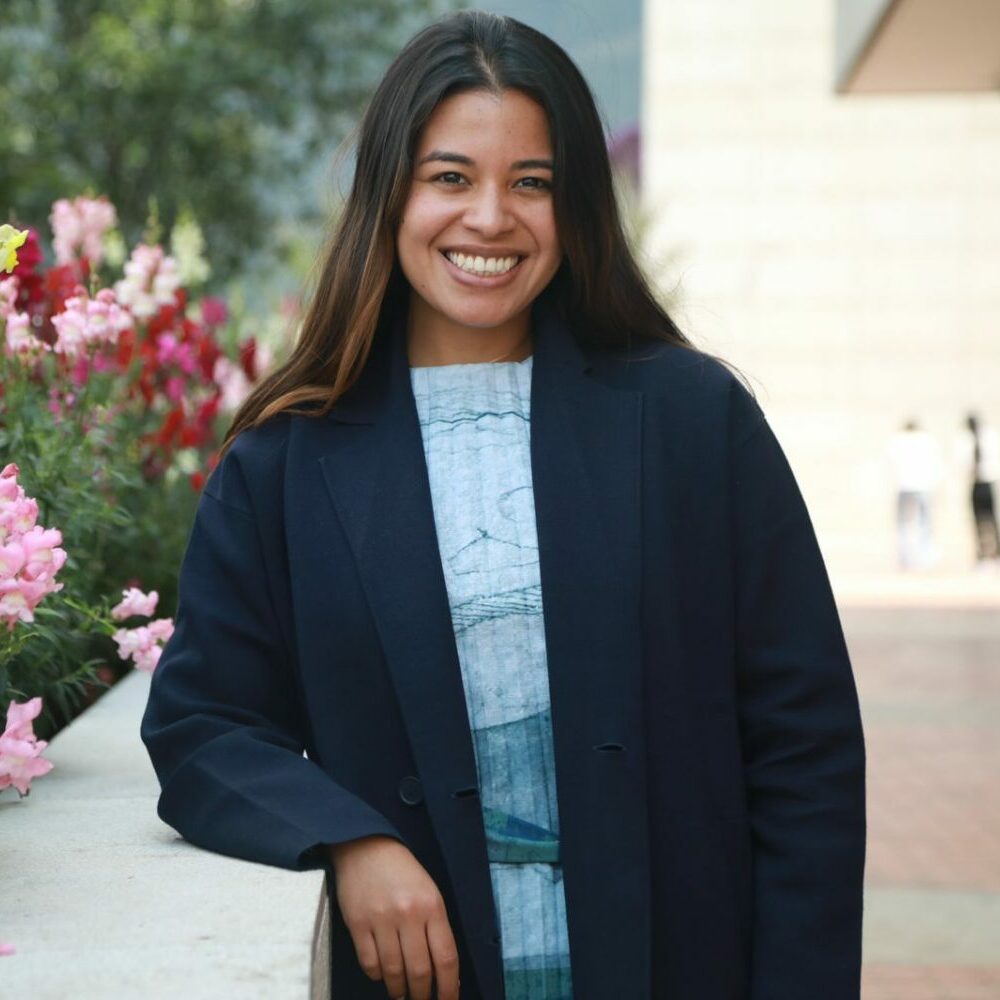
Andrea Cristina Robles Ustaríz
Andrea Cristina Robles Ustaríz is a lecturer and researcher in the Department of Constitutional Law at the Universidad Externado de Colombia. She teaches undergraduate and postgraduate courses on Economic Constitution, Organization of Public Power in Colombia, and Comparative Constitutional Law. She holds a PhD in Legal Sciences from the Universities of Siena and Foggia (Italy). She is a member of the University of Siena’s Research Group on Public and Comparative European International Law (DIPEC) and of the Constitutional Law Department at Universidad Externado de Colombia, within the research line on constitutional economic law.
Introductory readings
- Albanesi, E. Teoria e tecnica legislativa nel sistema costituzionale. Editoriale Scientifica, 2019.
- Barsotti, V., Carozza, P. G., Cartabia, M., & Simoncini, A. Italian Constitutional Justice in Global Context. Oxford University Press, 2015.
- Conde, E. A. “La ejecución de las resoluciones del Tribunal Constitucional. ¿Un cambio de modelo de justicia constitucional?” Revista de Derecho Político, 1(101), 2018, 661–701.
- Figueruelo Burrieza, A., & Villacorta Mancebo, L.-Q. “La relación entre el Legislador y el Tribunal Constitucional: una panorámica sobre el control y la cooperación a desarrollar.” Asamblea. Revista Parlamentaria de la Asamblea de Madrid, (38), 2018, 47–87.
- Gómez-Velásquez, A. “La colaboración armónica entre poderes: un principio inherente y necesario para el constitucionalismo transformador latinoamericano.” Revista de Investigações Constitucionais, 10(2), e238, 2023.
- Gómez-Velásquez, A. El deber de colaboración armónica entre los poderes públicos. Tirant lo Blanch, 2023.
- Kavanagh, A. The Collaborative Constitution. Cambridge University Press, 2023.
- Kosař, D., Šipulová, K., & Urbániková, M. “Informality and Courts: Uneasy Partnership.” German Law Journal, 24(8), 2023, 1239–1266.
- Ospina-Celis, D. F. “El exhorto al legislador en Colombia y su eficacia como mecanismo de colaboración armónica entre las ramas.” Anuario, 2018, 55(7).
- Roa Roa, J. E. Control de constitucionalidad deliberativo: El ciudadano ante la justicia constitucional, la acción pública de inconstitucionalidad y la legitimidad democrática del control judicial al legislador. Universidad Externado, 2020.
- Vasino, G. Sindacato di costituzionalità e discrezionalità del legislatore. Tutela sostanziale dei diritti e tecniche decisorie. Giappichelli, 2024.
Get to know our ICCAL projects
Discover the projects that bring ICCAL to life through research, collaboration, and local initiatives.