This project offers a comparative analysis of the Colombian Constitutional Court and the German Federal Constitutional Court as archetypical courts of their respective regions. They are understood as models that embody, in concentrated form, the historical and institutional challenges characteristic of Latin America and Europe. Germany represents the overcoming of an extreme authoritarian past, while Colombia embodies the transformation born out of decades of armed conflict. Both courts, widely referenced in their contexts, have helped shape constitutional communities of practice that strengthen democratic resilience through influential jurisprudence that is debated and adopted across their regions. The study examines their contributions to the consolidation of an autonomous constitutional field, capable of confronting shared structural challenges—such as authoritarianism, institutional capture, and threats to judicial independence—from different legal traditions. These traditions are exemplified by the German Verfassungsbeschwerde and the Colombian acción de tutela, which serve as the basis for proposing a theoretical framework of transregional judicial comparison applicable to other contexts.
Project members
Region / Focus
Colombia / Germany (transregional)
Bibliography
- Armin von Bogdandy & Ingo Venzke, In Whose Name? A Public Law Theory of International Adjudication, Universidad Externado, 2016.
- Philipp Dann & Arun K. Thiruvengadam, “Comparing Constitutional Democracy in the European Union and India: An Introduction,” in Democratic Constitutionalism in India and the European Union, Edward Elgar, 2021, pp. 1–41.
- Manuel José Cepeda Espinosa, “Kim Scheppele’s Vision for Restoring Democracy—and Why We Must Accept the Challenge,” American University International Law Review 39 (2024): 681.
- Manuel José Cepeda Espinosa, La Constitución de 1991: viviente y transformadora, Universidad de los Andes, 2022.
- András Jakab, “Constitutional Resilience,” in Max Planck Encyclopedia of Comparative Constitutional Law (Oxford University Press, 2022/2023).
- Ralf Michaels, “The Functional Method of Comparative Law,” in The Oxford Handbook of Comparative Law, 2nd ed. (2006): 345–389.
- Fernanda G. Nicola & Günter Frankenberg, Comparative Law: Introduction to a Critical Practice, Edward Elgar, 2024.
- Kim Lane Scheppele, “Restoring Democracy Through International Law,” American University International Law Review 39 (2024): 587.

Armin von Bogdandy
Armin von Bogdandy is Director of the Max Planck Institute for Comparative Public Law and International Law in Heidelberg and Professor of Public Law at Goethe University Frankfurt. He studied law and philosophy, earned his doctorate in Freiburg (1988), and completed his habilitation at the Free University of Berlin (1996). He has been a visiting professor at institutions such as New York University, the European University Institute, the Academy of International Law in Xiamen, and the National Autonomous University of Mexico.
He has chaired the OECD Nuclear Energy Tribunal and served as a member of both the German Science Council and the Scientific Committee of the European Union Agency for Fundamental Rights. His research focuses on the structural transformations of public law from theoretical, doctrinal, and practical perspectives. At present, he is working on theorizing European and Latin American societies through a constitutional lens.

Manuel Góngora Mera
Manuel Góngora Mera has been Professor of Law at Universidad del Norte (Barranquilla, Colombia) since 2020 and an associated researcher at desiguALdades.net of the Freie Universität Berlin. He received his doctorate in public law from Humboldt University of Berlin in 2010 (summa cum laude), following master’s degrees in Economic Law from Universidad Javeriana (2001) and in Development Economics from Friedrich-Alexander University Erlangen-Nürnberg (2006).
His career includes positions at the Colombian Constitutional Court, the Ombudsman’s Office of Colombia, and the Nuremberg Human Rights Center. He worked as a postdoctoral researcher and lecturer at the Institute for Latin American Studies of the Freie Universität Berlin (2010–2019) and has held research stays at the University of Salamanca, FLACSO, the UN Research Institute for Social Development in Geneva, and the Inter-American Court of Human Rights in San José.
He has published extensively on international law, constitutional law, and human rights. His current research develops a theoretical framework for comparative constitutional law in Latin America, grounded in the concept of Latin American society.

Carolina Bejarano Martínez
Carolina Bejarano Martínez has been a senior researcher at the Max Planck Institute for Comparative Public Law and International Law since 2024. She holds a doctorate in law from Universidad de los Andes (2024) and a law degree from Pontificia Universidad Javeriana (2015, with honors). Alongside her academic work, she has extensive experience in strategic litigation and legal advising for local communities in Colombia facing territorial conflicts.
She was a full-time professor at Pontificia Universidad Javeriana and a lecturer at Universidad de los Andes, Universidad de Antioquia, and Goethe University Frankfurt, teaching legal theory, public law, and human rights. Her research has been supported by fellowships from Universidad de los Andes, the Max Planck Institute, and the Erasmus+ program at the University of Kent (UK).
Her publications address issues of jurisdiction, socio-environmental conflicts, inter-American law, and ethnic-territorial struggles in Colombia. Her current research agenda focuses on reconstructive approaches to human rights and contemporary transformations of public law from a comparative and interdisciplinary perspective.
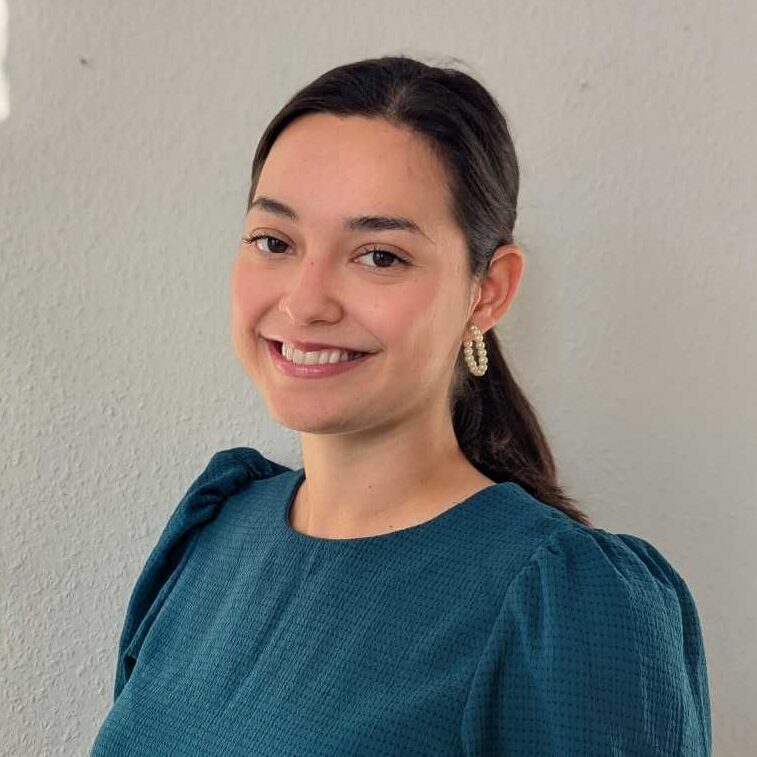
Vanessa Vanegas
Vanessa Vanegas is a German-Nicaraguan lawyer (Volljuristin) specializing in public international law and human rights. She is currently a researcher at the Max Planck Institute for Comparative Public Law and International Law (MPIL) in Heidelberg. Her doctoral thesis examines mechanisms of constitutional reconstruction, democratic resilience, and institutional design in post-authoritarian contexts in Latin America.
She studied law at Humboldt-Universität zu Berlin and completed her practical legal training at the Higher Regional Court of Berlin (Kammergericht). She also obtained an LL.M. from the University of California, Los Angeles (UCLA), and a Master’s degree in International Law from Université Paris II Panthéon-Assas.
Her professional career has developed across Europe and Latin America, with experience at the Inter-American Commission on Human Rights, the Deutsche Gesellschaft für Internationale Zusammenarbeit (GIZ) in Bogotá, and the German Federal Foreign Office.
Get to know our ICCAL projects
Discover the projects that bring ICCAL to life through research, collaboration, and local initiatives.