11.12.2025
Ibero-American Colloquia Nos. 336–338: Justice, Reparation, and State Responsibility in Latin America
The Max Planck Institute organised three consecutive sessions of the Ibero-American Colloquiums, dedicated to the challenges of accountability, reparation and institutional response in Latin America.
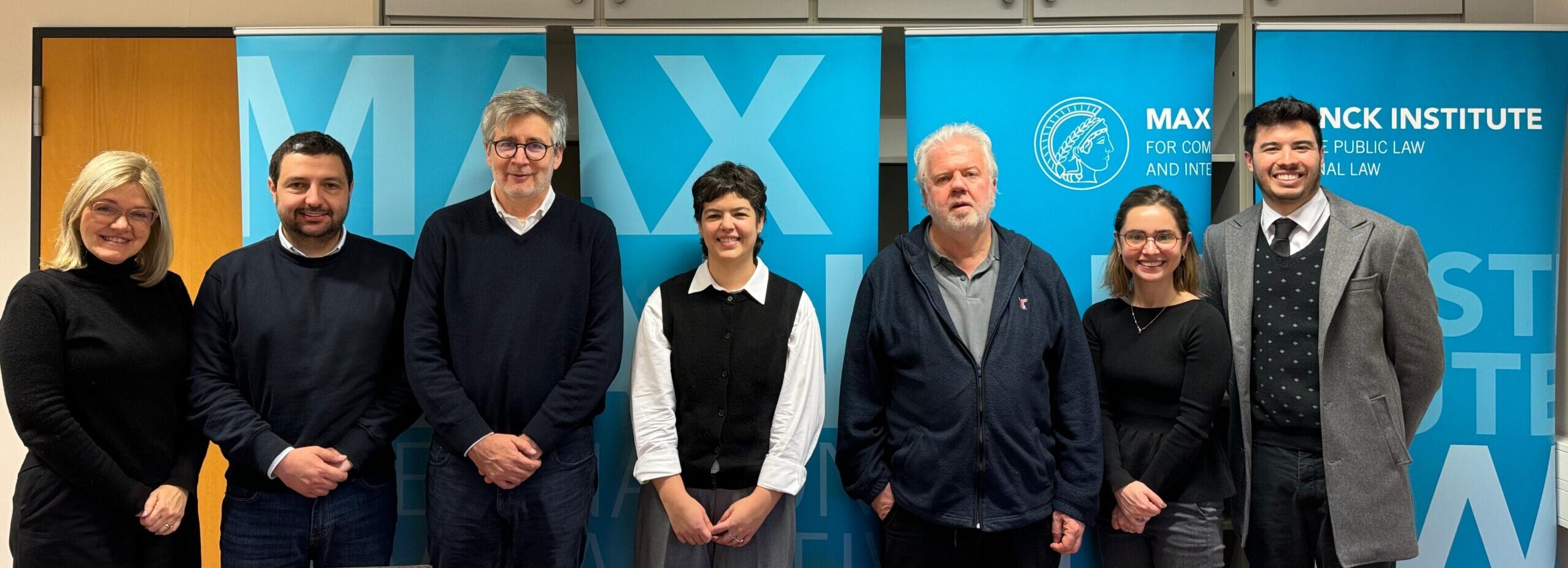
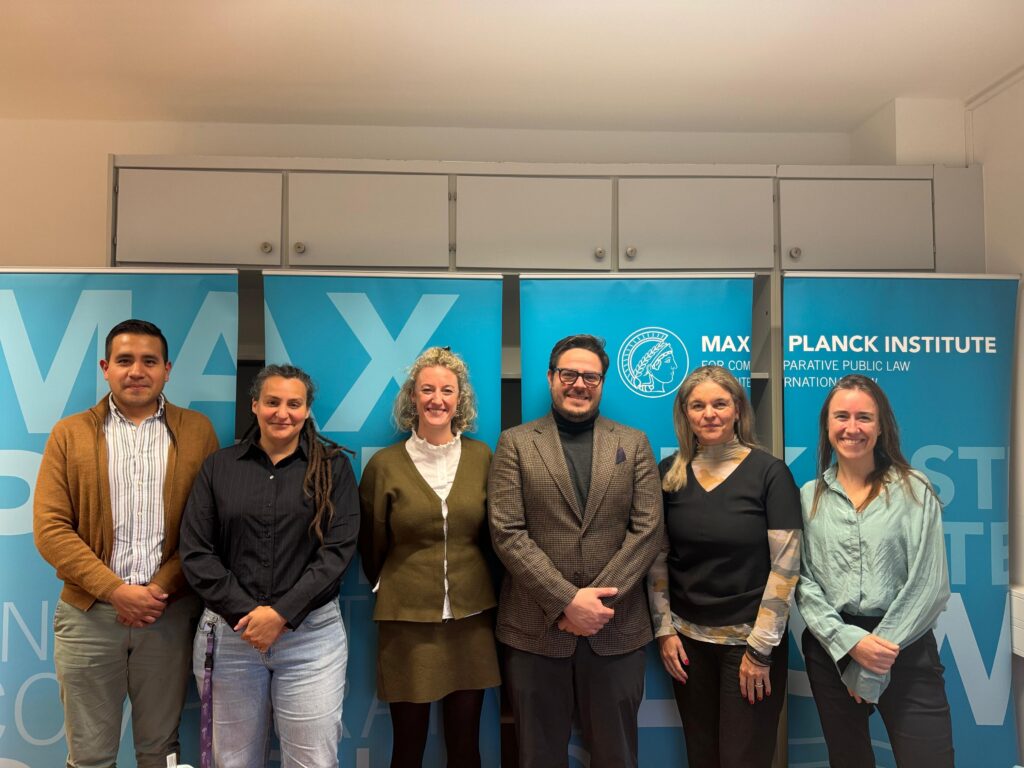
On December 10, 2025, the Max Planck Institute for Comparative Public Law and International Law hosted three consecutive sessions of its Ibero-American Colloquia series (Nos. 336–338). Taken together, these meetings offered an articulated perspective on how legal systems in Latin America respond to urgent demands for accountability, reparation, and stronger institutional frameworks.
Business and Human Rights in Latin America (Colloquium 336)
The first session took the form of a closed meeting of experts dedicated to the regional business and human rights agenda. The exchange addressed normative advances, persistent challenges, and opportunities for coordination, with the aim of outlining a shared roadmap toward 2026 and strengthening the link between academic research and practical developments in the field.
Reparative sanctions and transitional justice in Colombia (Colloquium 337)
The second colloquium featured a presentation by Nicolás Buitrago Rey (University of Notre Dame), who examined the special sanctions applied by Colombia’s Special Jurisdiction for Peace (JEP). His intervention explored what characterizes a measure with reparative vocation and how these sanctions fit within the broader architecture of transitional justice in the country.
State responsibility in cases of disappearance and death in custody (Brazil) (Colloquium 338)
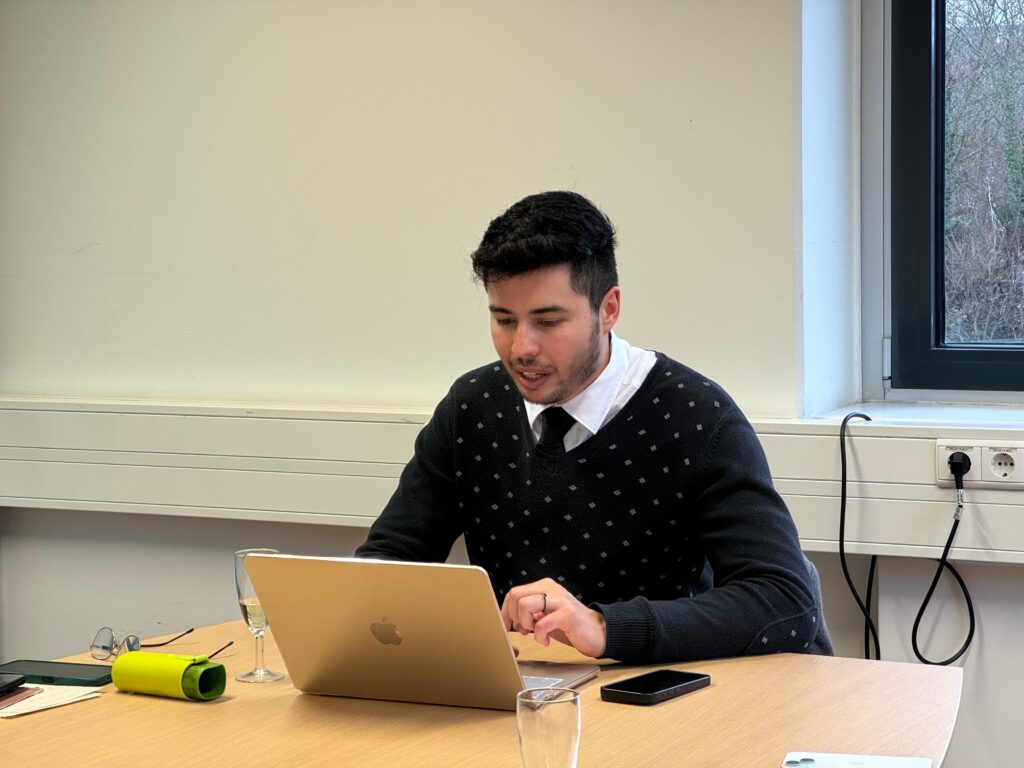
The third session was delivered by Luisa Mozetic Plastino (FGV), who presented a detailed study on the administrative and legal pathways available in São Paulo to establish the civil responsibility of the State in cases involving the disappearance and death of detained persons. The discussion provided an opportunity to reflect on institutional capacities and procedural frameworks in situations of heightened legal and social sensitivity.
Discussion and concluding remarks
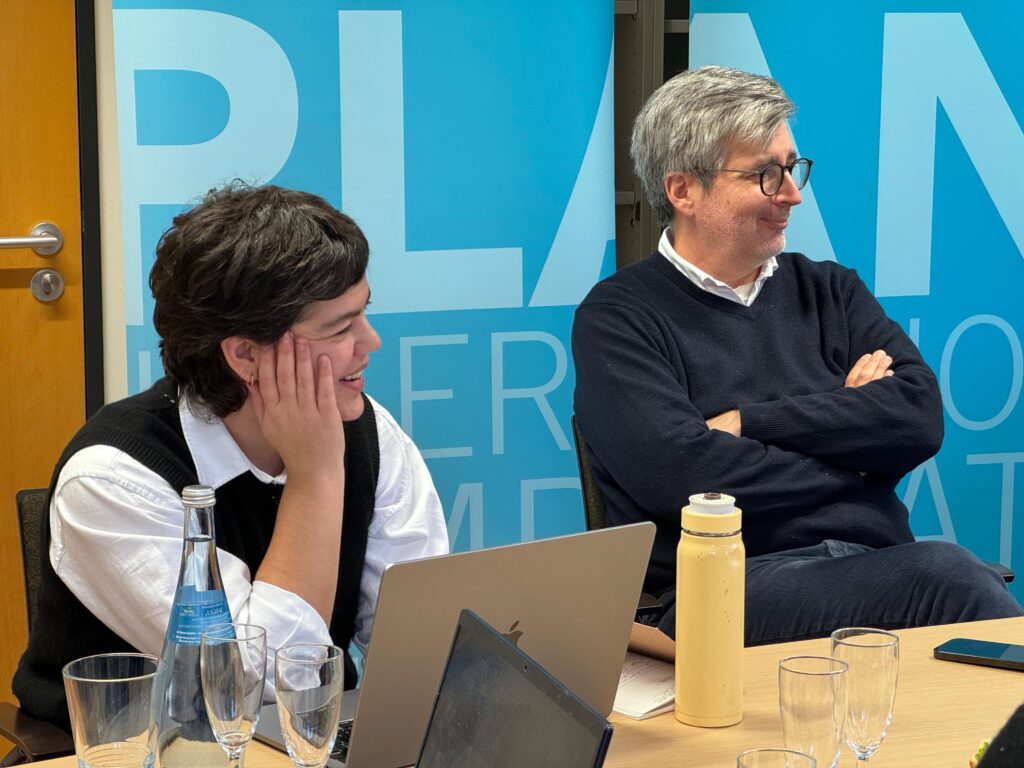
All three sessions benefited from comments by Carolina Bejarano Martínez, Joaquín Garzón, Mariela Morales, Pablo Saavedra, and Rodrigo Uprimny, who situated each contribution within a comparative framework connecting justice, human rights, and institutional design across Latin America.
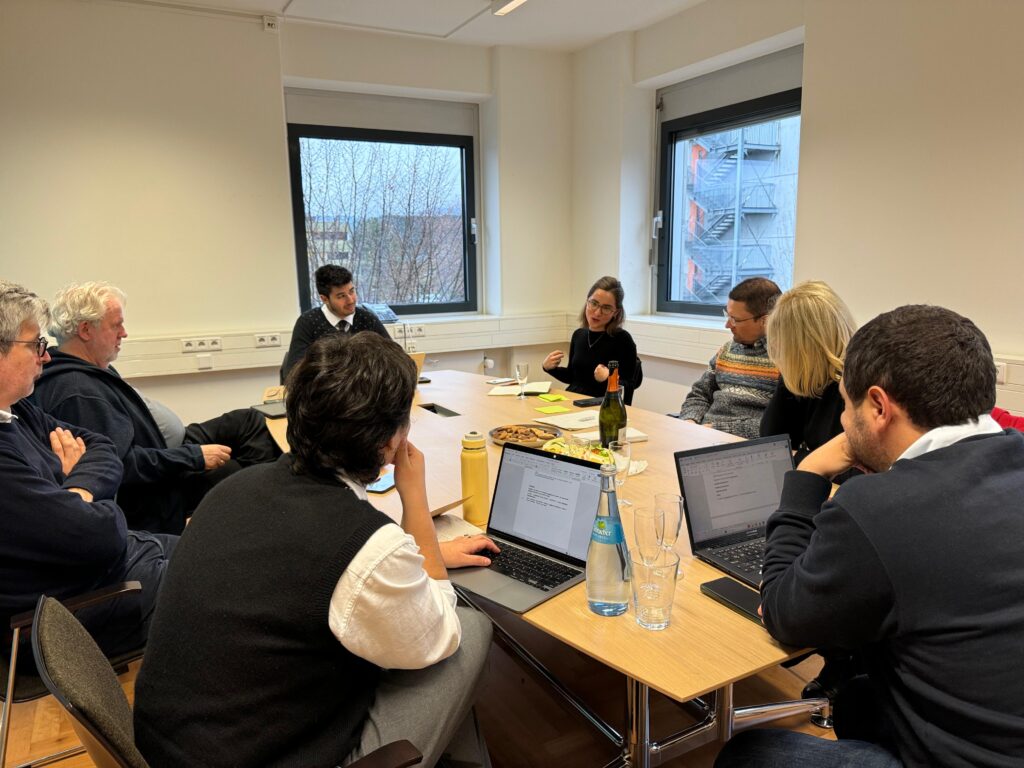
Taken together, the colloquia highlighted a shared regional concern: the continuous adaptation of legal tools to respond to complex social realities and growing demands for accountability. The ICCAL project thus reaffirms its commitment to fostering spaces of dialogue that bring together research, practice, and comparative reflection in Latin America.