26.03.2026
Ibero-American Colloquium No. 342: Global Constitutionalism in Latin America
Anny Matamoros Pineda critically examined the foundations, limits, and challenges of global constitutionalism from a Latin American and pluralist perspective of international law.
25 March 2026, MPIL Heidelberg
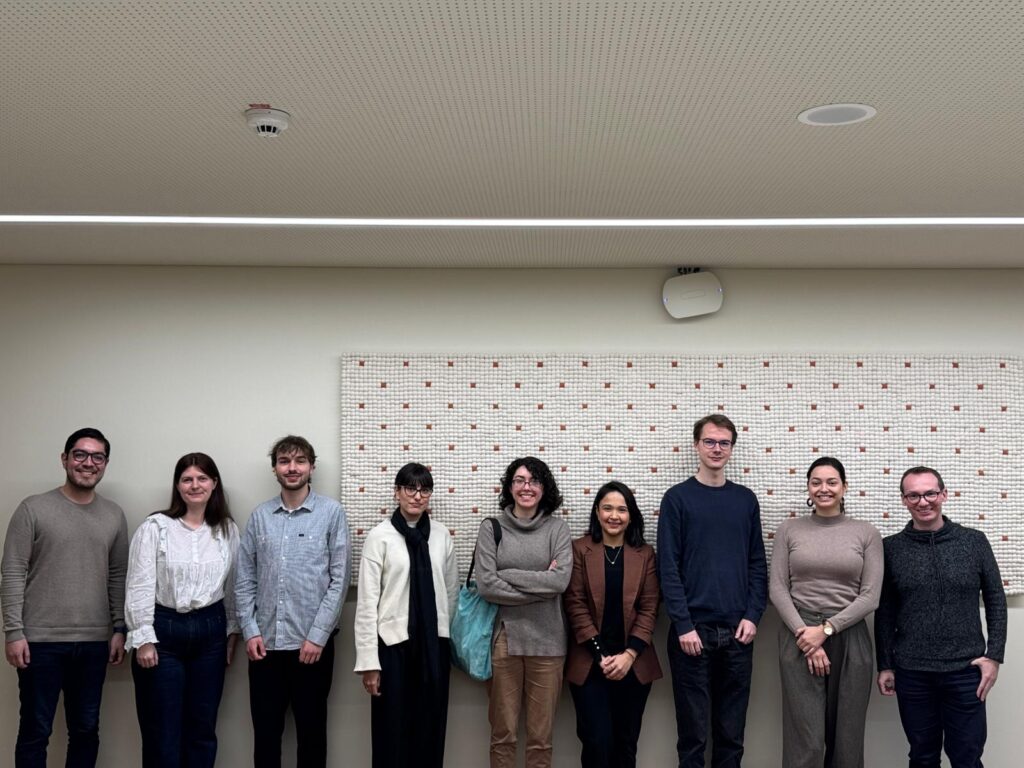
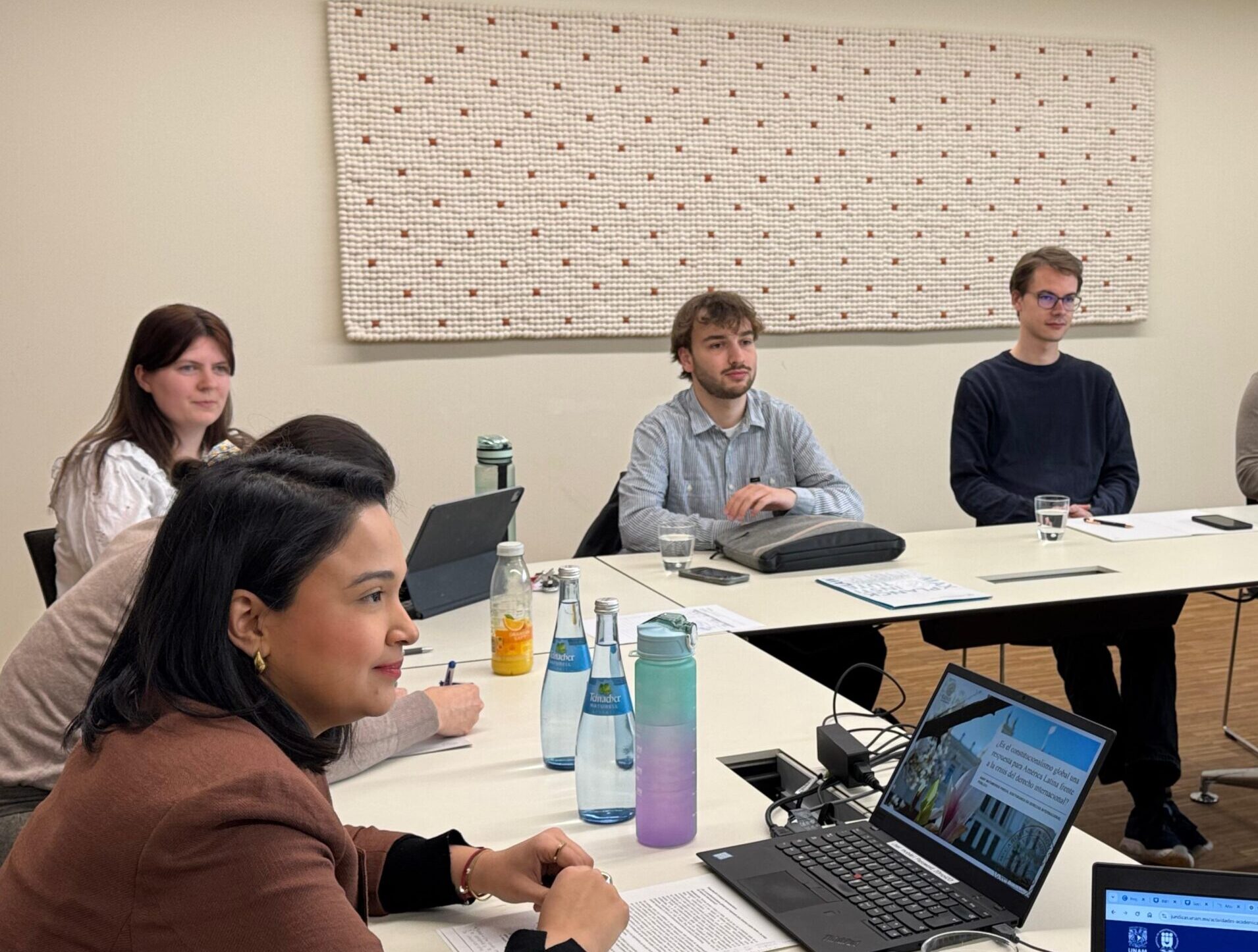
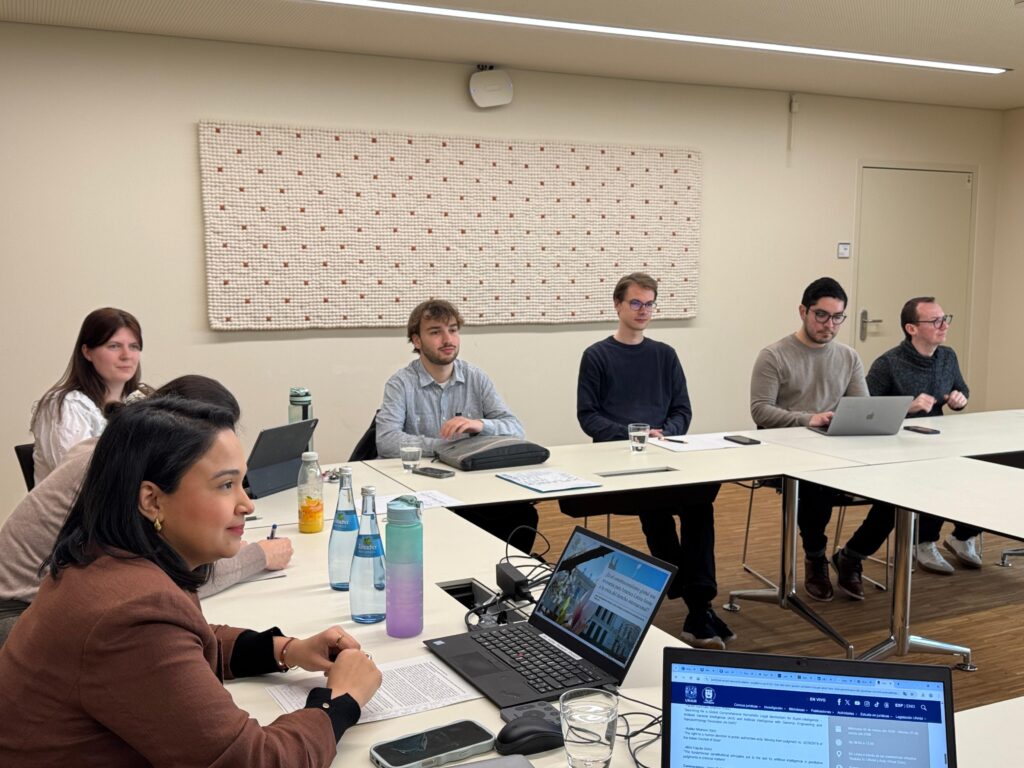
Global constitutionalism in Latin America was the central topic of Ibero-American Colloquium No. 342 at the Max Planck Institute for Comparative Public Law and International Law (MPIL Heidelberg), where participants discussed its theoretical foundations, critiques from the Global South, and its relationship with legal pluralism and the ICCAL project.
Global constitutionalism in Latin America and the crisis of international law
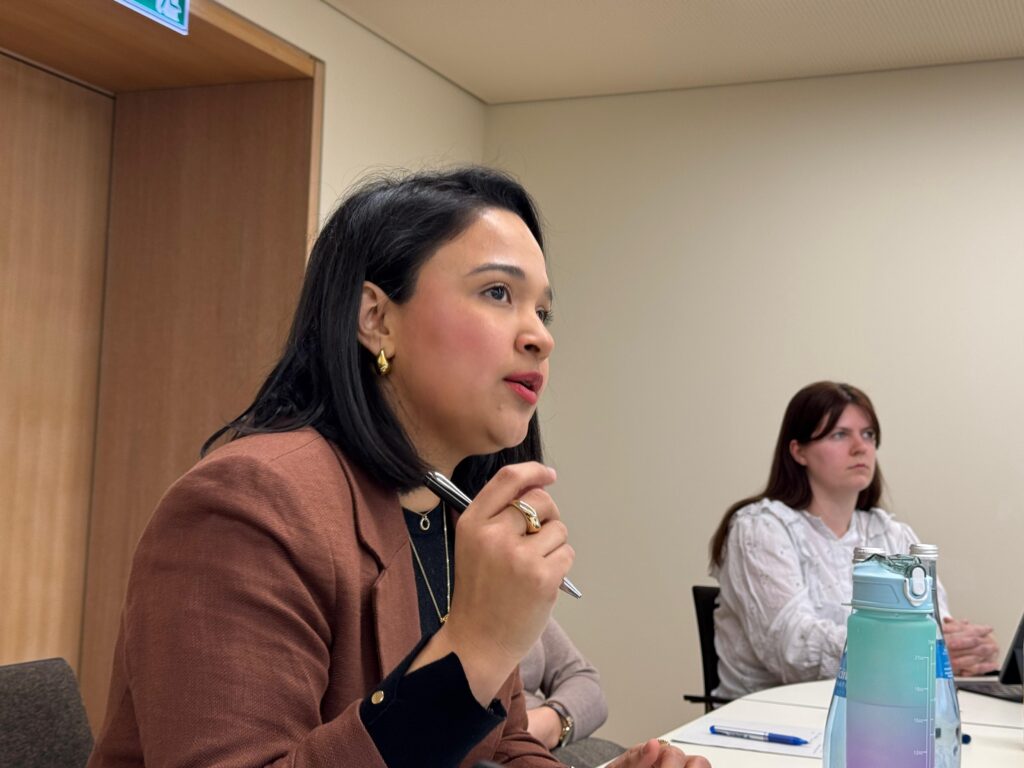
The presentation was delivered by Anny Matamoros Pineda, doctoral researcher in Public International Law at Lund University. Her intervention examined global constitutionalism as a theoretical framework aimed at identifying and promoting constitutional principles in the international sphere, particularly the rule of law, democracy, and the protection of human rights.
The speaker explained that global constitutionalism emerged mainly in the 1990s and early 2000s as a response to the fragmentation of international law. Within this framework, the rule of law is understood as a principle capable of structuring and limiting political decision-making processes at the international level.
Critiques of global constitutionalism from the Global South
The presentation also addressed important critiques of constitutionalist interpretations of international law. In particular, the speaker referred to the work of Anne Peters, who has highlighted that constitutionalist approaches may be inherently anti-pluralist and predominantly European, while insufficiently recognizing cultural diversity.
From this perspective, the presentation emphasized that without addressing these structural concerns, global constitutionalism risks reproducing asymmetries that affect the interests of the Global South.
The effectiveness of the Charter of the United Nations as a structuring instrument of the international legal order was also discussed, particularly in light of continuing global conflicts that challenge its capacity to ensure international peace.
Colonial legacies of international law and the centrality of the nation-state
A central part of the presentation focused on the colonial legacy embedded in international law. In this context, the traditional narrative portraying Francisco de Vitoria as a defender of Indigenous peoples was critically revisited in light of recent scholarship questioning this interpretation through an analysis of his writings on legitimate authority and just war theory.
The speaker also highlighted historical efforts by Latin American diplomats to reshape structural dynamics within the international system, including initiatives such as the Montevideo Convention and the American Declaration of the Rights and Duties of Man.
From a critical historical perspective, the presentation examined the centrality of the nation-state as a possible continuation of imperial structures. The traditional interpretation of the Peace of Westphalia as a rupture between empires and nation-states was discussed, alongside critical historiographical approaches that emphasize continuities of imperial power into the nineteenth and twentieth centuries.
The consolidation of the nation-state in Latin America was presented as a process that often involved internal homogenization dynamics affecting Indigenous and Afro-descendant communities.
Legal positivism and the limits of global constitutionalism
The presentation also examined legal positivism as a dominant paradigm shaping contemporary international law. From this perspective, positivism contributes to consolidating a state-centered conception of law that limits the recognition of alternative normative orders and constrains the development of legal pluralist approaches.
Within this framework, the speaker critically assessed Luigi Ferrajoli’s proposal for global constitutionalism. While his approach recognizes the historical character of the nation-state and proposes governance and guarantee functions beyond it, it remains anchored in a positivist understanding of law and maintains the centrality of the state as the axis of the international legal order.
The presentation further emphasized that hierarchical constitutionalist approaches may limit communication between local, national, regional, and international normative frameworks.
Global constitutionalism in Latin America, legal pluralism, and ICCAL
From a Latin American perspective, the debates addressed in the colloquium resonate directly with discussions developed within the framework of the Ius Constitutionale Commune in Latin America (ICCAL), particularly regarding the interaction between international human rights law, domestic constitutional law, and structural transformations aimed at promoting social inclusion.
Critiques of statism, legal positivism, and colonial legacies in international law presented during the session connect closely with one of ICCAL’s central objectives: the construction of a regional legal space characterized by normative pluralism, multilevel interaction, and the strengthening of common human rights standards in Latin America.
In this sense, discussions on the limits of global constitutionalism in Latin America contribute to situating regional constitutional developments within broader debates on the transformation of contemporary international law and the role of the Global South in redefining its normative foundations.
The session concluded by reaffirming the importance of the Ibero-American Colloquium series as a space for critical academic dialogue on international law and Latin America.