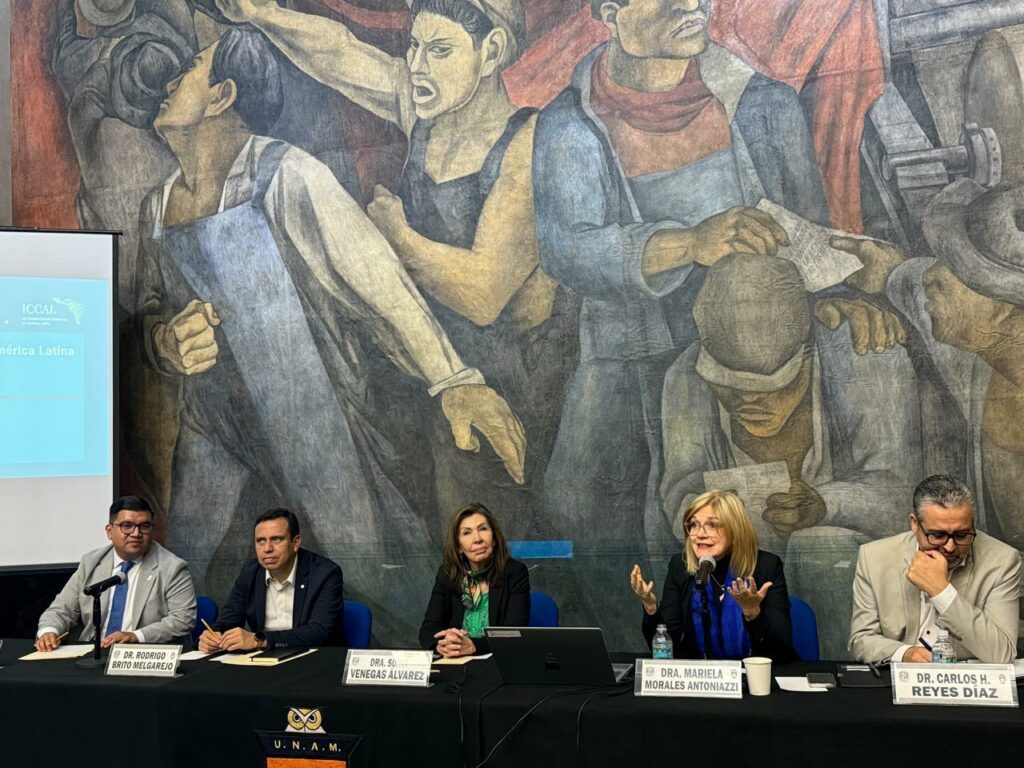
What is ICCAL
The Ius Constitutionale Commune en América Latina (ICCAL) is an academic project that examines the constitutional and legal challenges of the region through the lens of public law. It focuses on the promotion, respect, and guarantee of human rights, democracy, and the rule of law.
What is ICCAL & Our Concepts

What is ICCAL?
The Ius Constitutionale Commune en América Latina (ICCAL) is an academic project that addresses the region’s legal problems from the perspective of public law, centered on the promotion, respect, and guarantee of human rights, democracy, and the rule of law.
It explores the common features of Latin American public law systems and their interaction between international and national law, analyzing the consolidation of a community of practice and the development of a ius commune with comparative relevance.
It defends the existence of a legal phenomenon arising from the confluence between both orders, with its own identity and orientation, and promotes a shared legal, doctrinal, and academic reading.
As an approach of Latin American transformative constitutionalism, it seeks to respond to structural deficits and adverse socioeconomic conditions, examining problems such as exclusion, weak normative frameworks, and difficulties in the full guarantee of rights.
It describes a transnational legal practice that links the American Convention on Human Rights with inter-American instruments, national constitutions, international law, and jurisprudence, in dialogue with social processes.
ICCAL brings together academics, jurists, judges, civil society, officials, and social leaders in a multidisciplinary collective that drives structural transformations to materialize the constitutional promises and human rights treaties in the region.
Background
ICCAL arises from the interaction between Latin American, European, and other academic communities, based on a tradition in public law and comparative constitutionalism.
It was born from the constitutionalism renewed after the fall of authoritarian regimes, with emphasis on constitutional principles and values, hermeneutical approaches, and openness to international human rights law.
Since 2004, the Max Planck Institute for Comparative Public Law and International Law (Heidelberg) has hosted the Ibero-American Colloquium, a space of collective configuration of ICCAL, bringing together academic institutions, national and inter-American courts, and civil organizations.
The project has generated conferences, more than thirty books, academic articles, and both in-person and online courses, with special projection in Latin America.

Analytical Function of ICCAL
The analytical function of ICCAL focuses on studying the interaction between national constitutions and international law, particularly the Inter-American Human Rights System.
It examines how inter-American developments strengthen internal transformative discourses and shape a transformative constitutionalism, integrating principles of public law and human rights into a common law with its own identity and global relevance.
It analyzes processes of legal influence and diffusion, identifies common elements in national systems, and evaluates institutional weaknesses that affect democracy, the rule of law, and human rights.
It uses techniques such as the control of conventionality and the justiciability of economic, social, cultural, and environmental rights, highlighting judicial dialogue, constitutional pluralism, and the role of the co

Normative Position of ICCAL
The normative position of ICCAL promotes transformative constitutionalism, oriented toward respect for human rights, democratic values, and the rule of law as engines of social change.
It seeks to make constitutional promises effective throughout the region through the diffusion of human rights standards, the compensation of national deficits, and the empowerment of social actors.
Its agenda prioritizes overcoming institutional weaknesses that generate insecurity, impunity, and corruption, and combating inequality, violence, and exclusion, with special attention to vulnerable groups.
ICCAL articulates a network of institutions and people who use legal instruments to drive structural changes, redefine the justification of power, and strengthen the role of law and academia in the face of systemic deficiencies, recognizing that many of them are rooted in law itself.
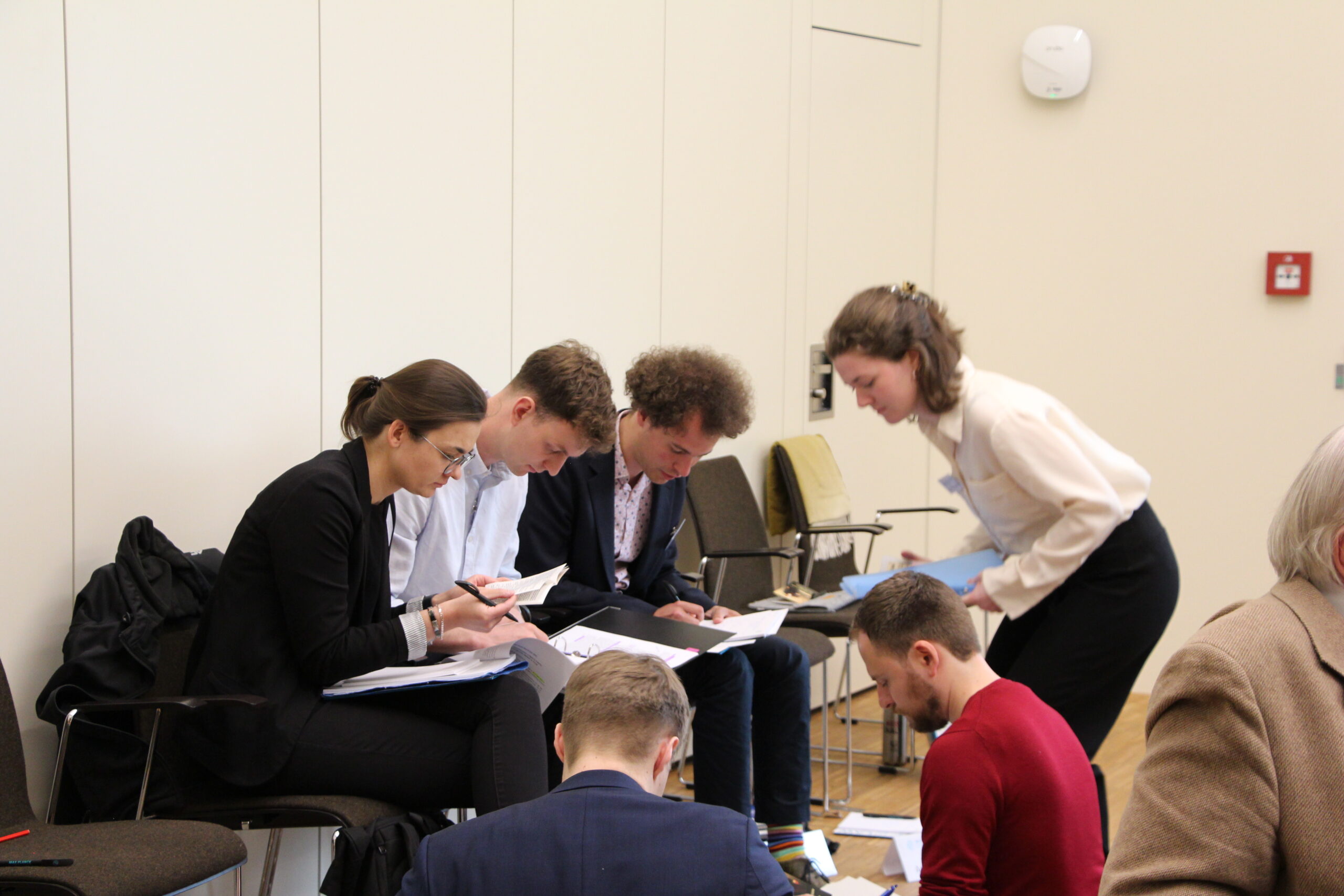
Methodological Approach of ICCAL
The methodological approach of ICCAL combines academic research on national and international law, a comparative orientation, and a methodology based on principles, in particular the triad: human rights, democracy, and the rule of law.
It follows a comparative approach that transcends the traditional vision of monism and dualism, highlighting the interaction between national courts and the Inter-American Human Rights System, as well as among diverse national institutions.
It gives special importance to the human rights community of practice in Latin America as a driving force in the construction of the region’s common law, recognizing ethnic and cultural diversity and rejecting all forms of exclusion.
It also observes how the Inter-American Court of Human Rights integrates into its jurisprudence the different forms of social and cultural law that coexist in the region.
Finally, by conceiving transformative constitutionalism as a global phenomenon, ICCAL offers a relevant contribution for other regions, both to reflect on the universality of Global North conceptions and to inspire new perspectives in contexts where this approach is not common.
Our Concepts
Ius Constitutionale Commune (Ius Commune)
The perspective of the ius commune recognizes the political and legal diversity of Latin America but also identifies common constitutional values and interpretive methods that can sustain regional legal integration. In practice, this phenomenon manifests in judicial dialogue, coordinated jurisprudence, and institutional reforms that incorporate inter-American standards and comparative knowledge into domestic systems.
The approach is explicitly transformative: it seeks to reduce structural inequalities and strengthen democratic governance by making rights effective in real life. Beyond written norms, it is a living practice that evolves through communities of practice that connect courts, academia, public institutions, and civil society. In this way, the ius commune ceases to be only a conceptual framework and becomes operative law, generating better results for the people and societies of the region.
Interamericanization
Interamericanization is a multidirectional process. National courts, legislatures, and agencies internalize inter-American standards through jurisprudence, legislative reform, administrative practice, and training. At the same time, states shape regional law by citing, implementing, and criticizing the criteria of the Inter-American Court in contentious cases and advisory opinions.
This exchange fosters the harmonization of human rights across the region, strengthens accountability, and builds a shared legal identity. It also serves as a vehicle of transformative constitutionalism: it is not only about incorporating norms, but about creating a regional space of legal convergence. Recent jurisprudence on climate rights is a paradigmatic example: its effects transcend national borders and influence litigation and public policies in several countries, showing the expansive reach of interamericanization.
Transformative Constitutionalism
Transformative constitutionalism goes beyond the mere preservation of existing arrangements. It requires courts to interpret rights expansively, legislators to adapt the legal framework to constitutional values, administrations to align policies, and civil society to take part in defining priorities.
This approach is measured by concrete outcomes: do institutions work better, are rights more effectively protected, do historically marginalized groups gain real access? In Latin America, where inequality and democratic fragility persist, transformative constitutionalism seeks to turn constitutions into engines of structural change. Although it draws on comparative experiences—including European ones—it is deeply anchored in Latin American contexts and challenges.
Transformative Impact
Measuring transformative impact requires combining quantitative and qualitative indicators. Among the former are access to justice, education, health, or compliance with international judgments. Among the latter are changes in public discourse, institutional culture, and the empowerment of historically marginalized groups.
This emphasis on outcomes fosters iterative learning: strategies are adjusted when evidence shows what works, for whom, and under what conditions. Transformative impact allows courts, state agencies, and civil society to align around shared goals and enables transnational comparisons within the ius commune. In this way, success is not measured by the existence of norms alone, but by the effective transformation of practices and social realities.
Communities of Practice
Inspired by Lave and Wenger’s theory of situated learning, communities of practice form the operational core of ICCAL. They are spaces where arguments circulate, jurisprudential innovations spread, and shared interpretive frameworks are built based on professional trust and common problem-solving.
Their comparative and trans-institutional character sustains legal convergence beyond formal institutional mechanisms, turning ideas into practices and practices into doctrine. By connecting courts, academia, public institutions, and civil society, communities of practice ensure the continuity of the project and its capacity to generate living, dynamic law with real impact on daily life.