30.01.2026
Ibero-American Colloqium No. 339: Discourses and Legal Strategies before the International Court of Justice
Paula Wojcikiewicz Almeida presented an empirical analysis of State participation before the International Court of Justice.
30 January 2026, MPIL Heidelberg
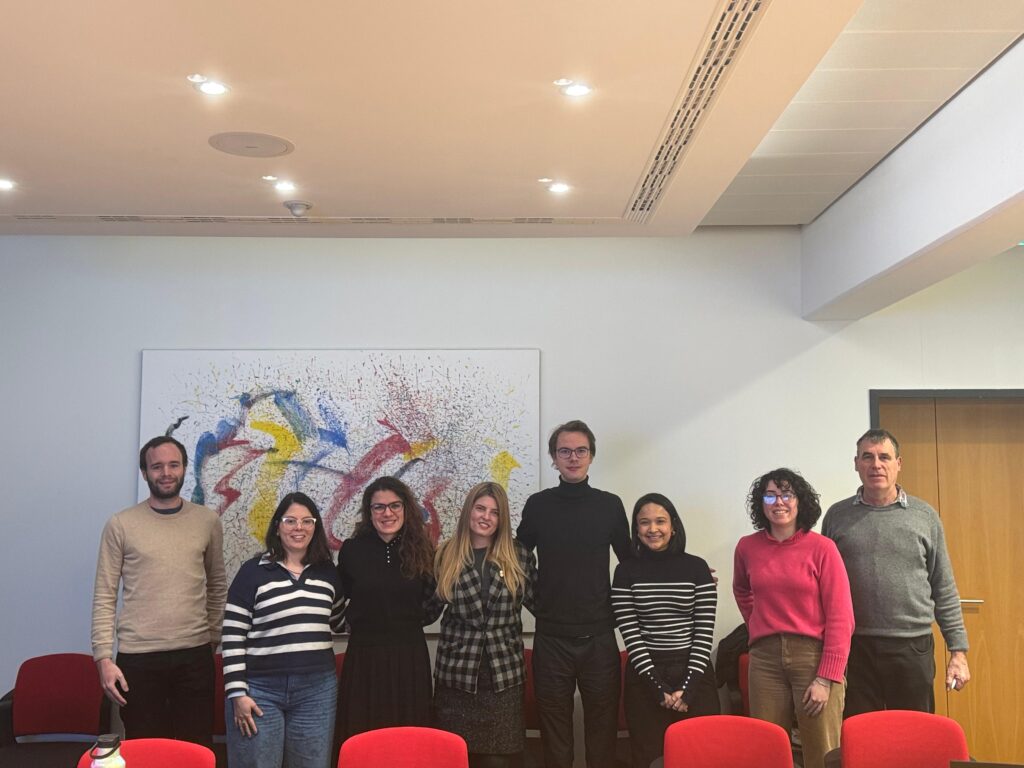
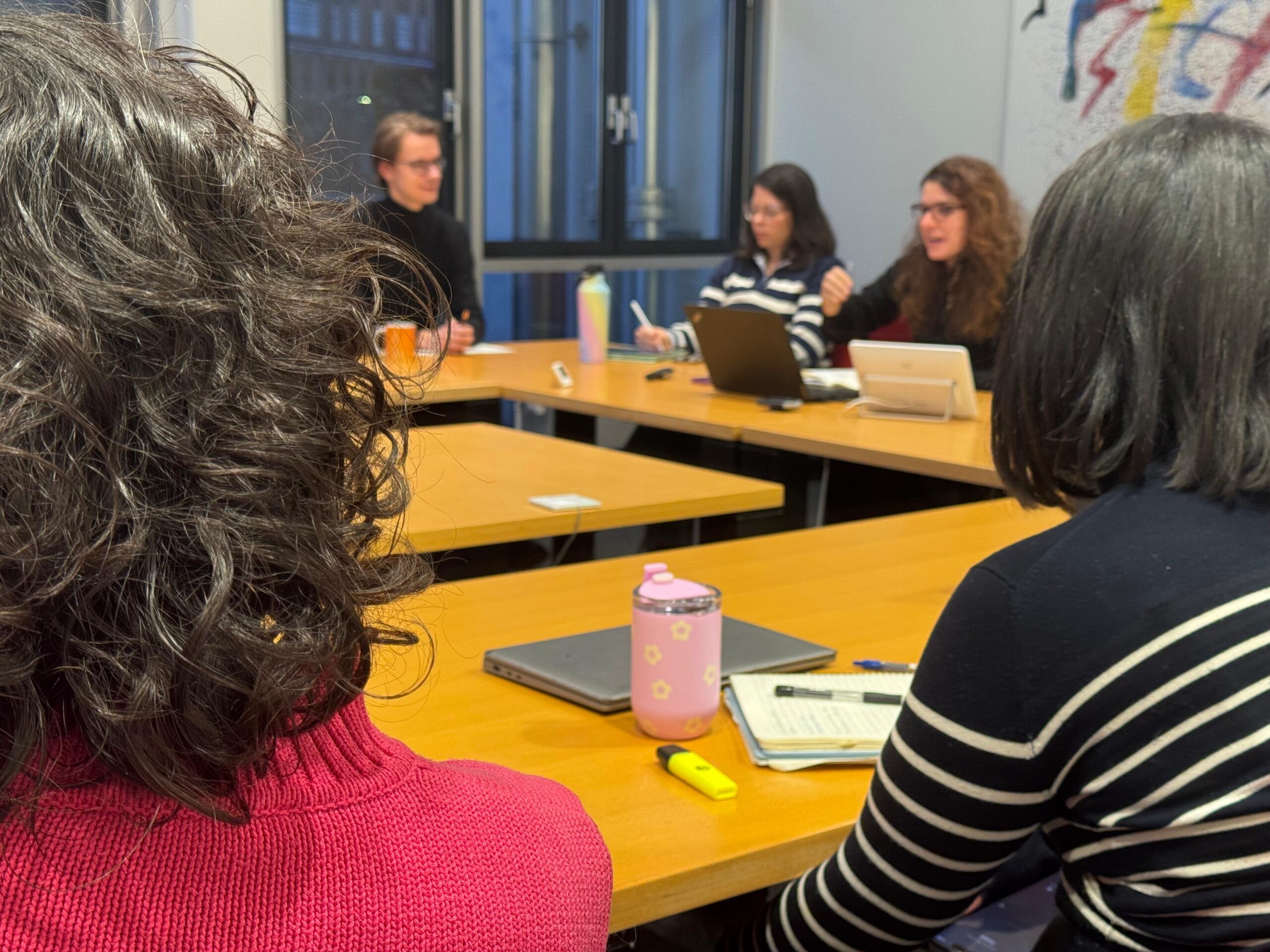
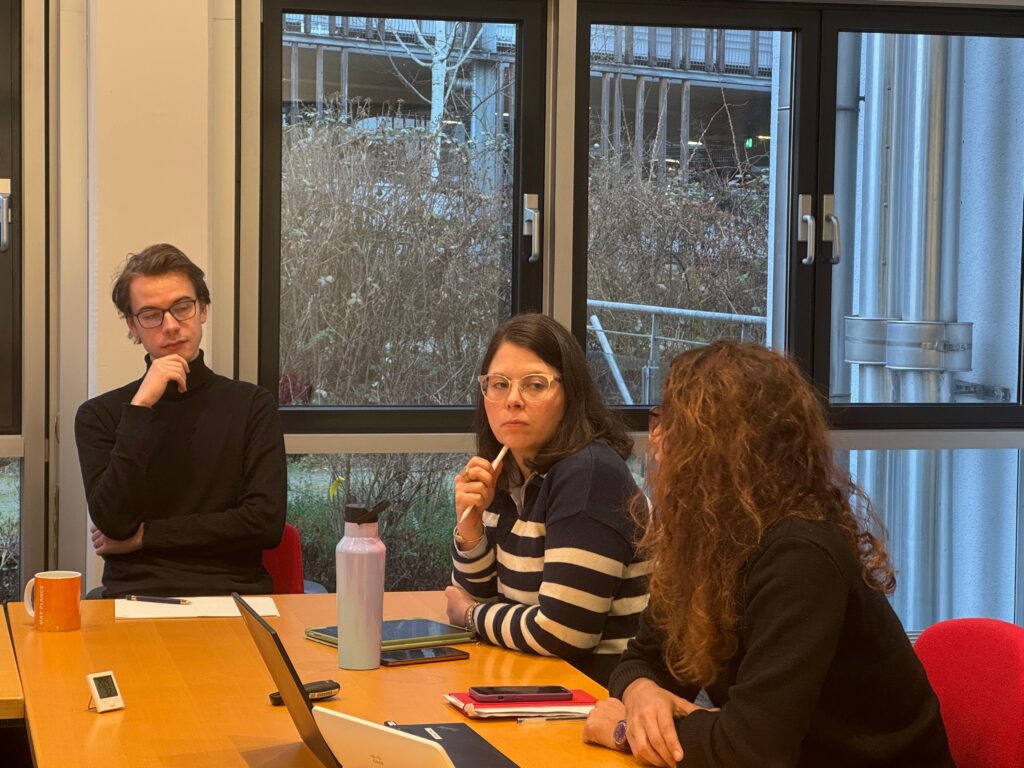
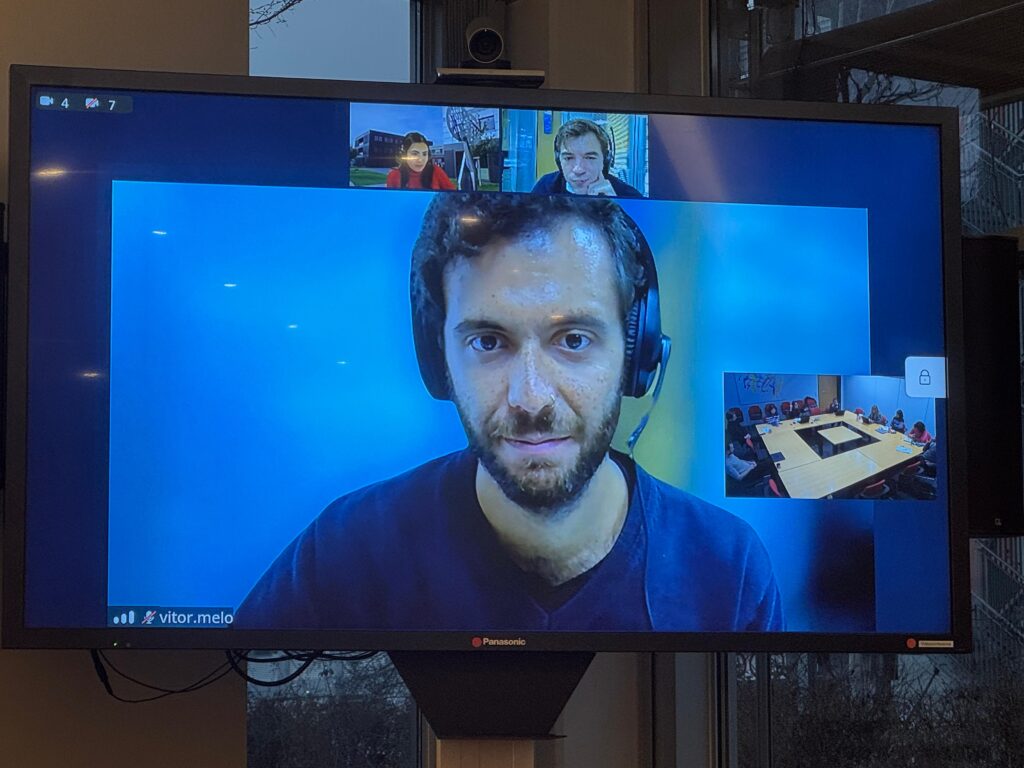
The Max Planck Institute for Comparative Public Law and International Law held a new session of its Ibero-American Colloquium series under the title “Latin American Narratives in The Hague: An Empirical Analysis of State Participation before the International Court of Justice”. The session was conducted in Spanish and brought together both in-person and online participants.
From courts to discourses
The presentation was delivered by Paula Wojcikiewicz Almeida, researcher at the Center for Global Law of Fundação Getulio Vargas, who presented the progress of a collective research project focused on the empirical study of discourses and legal strategies adopted by Latin American States before the International Court of Justice.
The presentation forms part of a broader line of research on the peaceful settlement of disputes and advisory proceedings before international courts. In particular, the project builds on previous research on Global South narratives in advisory proceedings on climate change, the results of which were published in a Max Planck Institute research series and later developed into an academic book.
Three questions for reading international practice
The research is structured around three core questions. First, which legal arguments Latin American States advance before the Court. Second, how these arguments are formulated and presented, including the role of State delegations and their professional and linguistic characteristics. Third, why States choose to participate in advisory proceedings and which strategic motivations explain their argumentative choices.
The project does not assume the existence of a unified Latin American narrative. On the contrary, its objective is to identify differences, nuances, and contingencies in State discourses, taking into account political, institutional, and personal contexts.
How to study what States say and do
The speaker highlighted the interdisciplinary nature of the project, which combines legal analysis with tools drawn from linguistics, sociology, and international relations. The methods employed include corpus analysis of written submissions and oral statements, delegation mapping, linguistic discourse analysis, and semi-structured interviews with diplomats and State officials.
In addition, the project incorporates a foreign policy analysis that allows legal arguments to be contextualized in light of internal variables such as changes of government, political orientations, and institutional capacities.
Debate as part of the method
The discussion session invited reflection on the use of Latin America as an analytical category, the absence of systematic regional coordination in advisory proceedings, and the role of the Court as a forum for both legal and political argumentation. The exchanges underscored the value of empirical and socio-legal approaches for understanding contemporary international legal practice.
The session concluded by reaffirming the importance of the Ibero-American Colloquium series as a space for critical academic dialogue on international law and Latin America.