11.12.2025
At the Crossroads: Where Geopolitics and Public Law Meet
The event held at the MPIL in Heidelberg examined how geopolitical uncertainty is reshaping contemporary public law.
December 11, 2025, MPIL Heidelberg
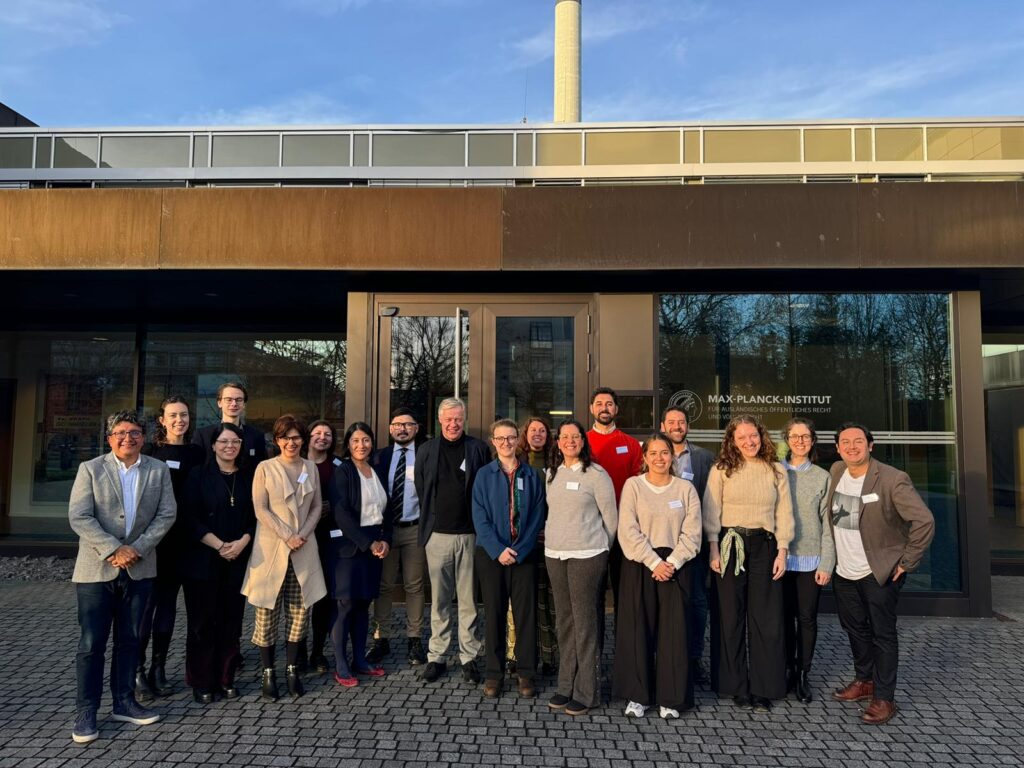
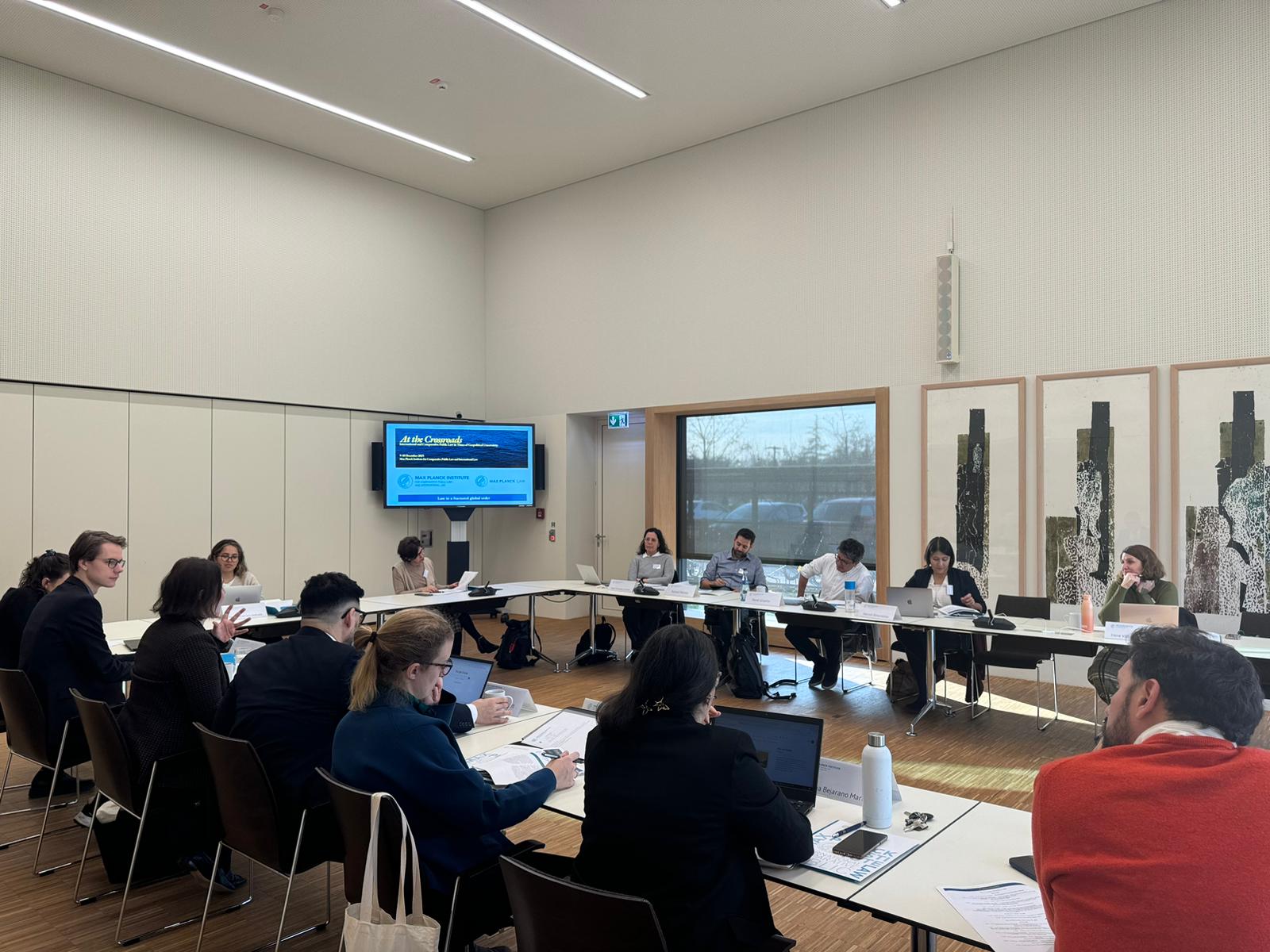
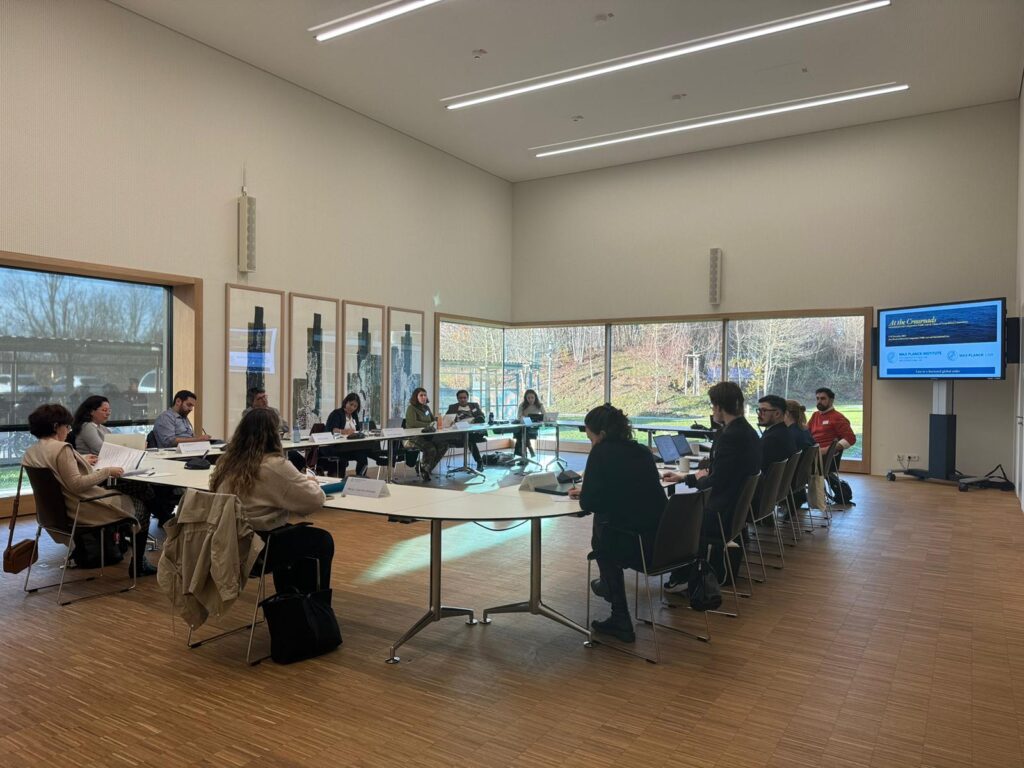
On December 9 and 10, 2025, the Max Planck Institute for Comparative Public Law and International Law in Heidelberg hosted the workshop At the Crossroads: International and Comparative Public Law in Times of Geopolitical Uncertainty. The event brought together scholars from different regions to reflect on an increasingly visible phenomenon: the ways in which contemporary geopolitical tensions are transforming the categories, practices, and institutions of public law.
Against a backdrop marked by the fragmentation of the international order, the weakening of multilateralism, and the resurgence of power politics and spheres of influence, the workshop addressed a central question: how are comparative public law and public international law responding to a rapidly changing global environment, particularly in Europe and Latin America.
Theoretical Foundations in Times of Uncertainty
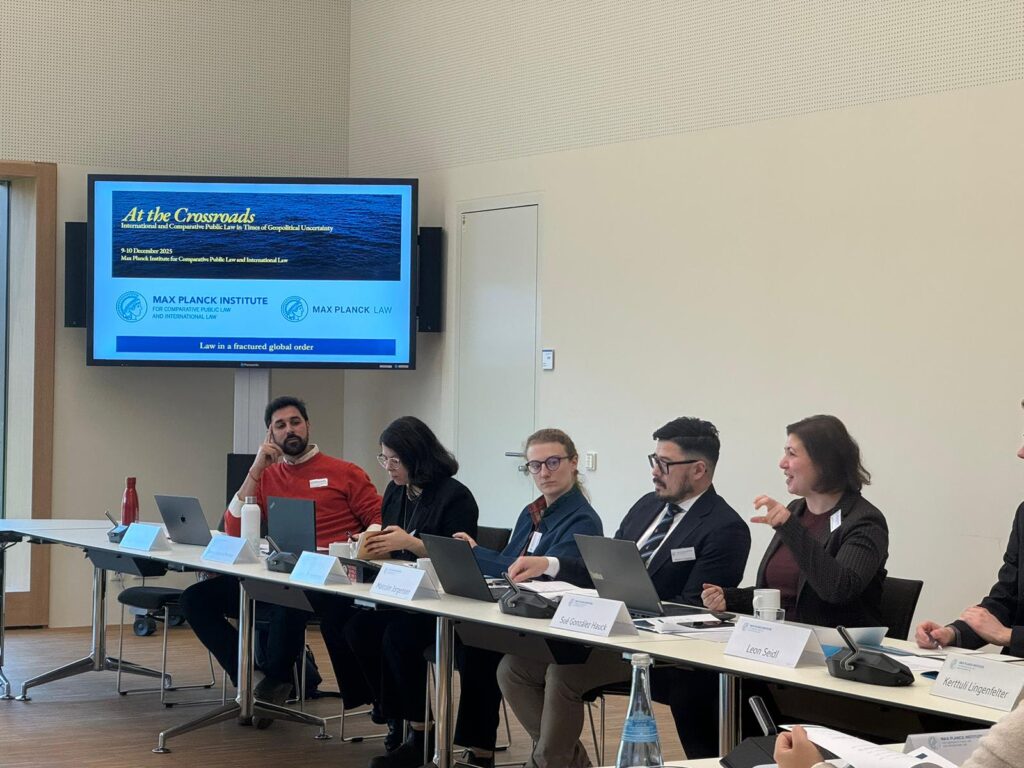
The first day of the event was devoted to exploring the conceptual and historical frameworks needed to understand this geopolitical turn. Chaired by René Urueña and Sué González Hauck, the opening interventions laid the groundwork for a discussion that cut across the relationship between law, power, and legal knowledge.
The presentations addressed, among other topics, the links between democracy and legal education, the impact of the decline of liberal multilateralism, and the ways in which long-term historical processes continue to shape regional institutions. Contributions by Daniel R. Quiroga-Villamarín, Fabia Fernandes Carvalho, Alma Beltrán y Puga, Leon Seidl, and Lavinia Francesconi highlighted how courts, international organizations, and legal practices are increasingly strained as international balances shift and dominant narratives of international law lose stability.
The discussions showed that these changes affect not only the application of law, but also its core categories, such as sovereignty, universalism, or rights, which now appear insufficient to explain a global order shaped by strategic rivalries, new forms of imperialism, and democratic backsliding.
Institutions, Disputes, and New Normative Spaces
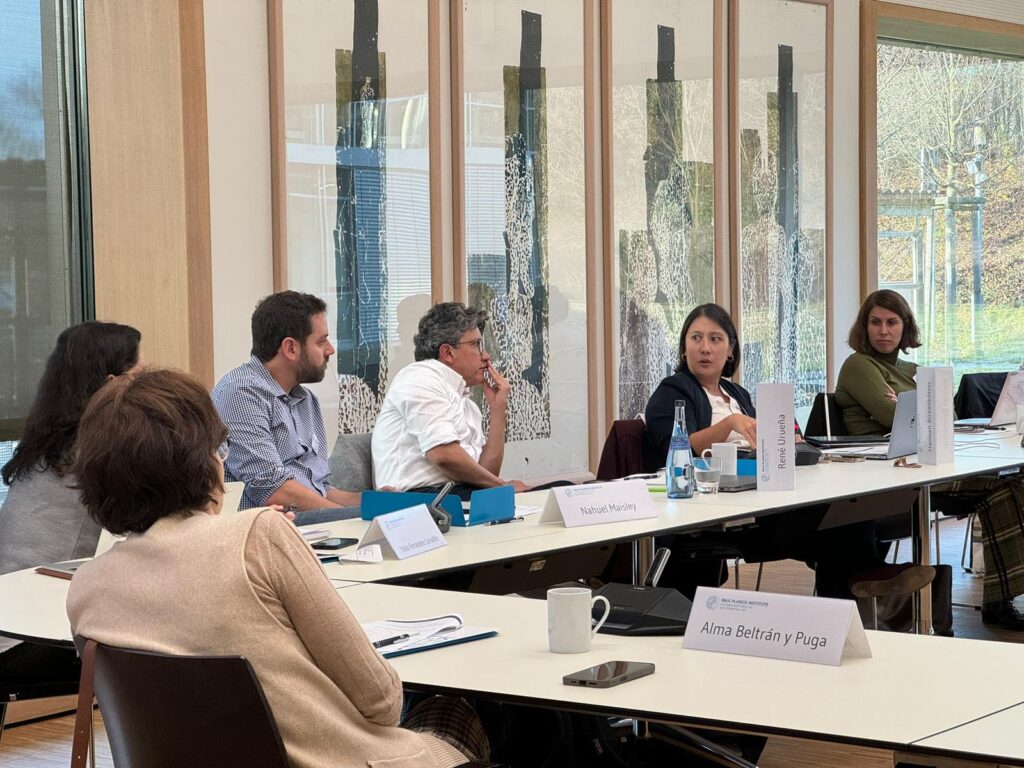
The second day shifted the focus to the institutional and practical level. The presentations examined how different legal actors are responding to geopolitical challenges in concrete areas such as regional justice, cyberspace, international political economy, and global governance.
Participants discussed the geopolitical role of the Inter-American Court of Human Rights, issues of sovereignty and non-intervention linked to electoral interference and the strategic use of cyberspace, as well as the legal tensions surrounding critical minerals and the energy transition. Contributions by Ignacio Perotti Pinciroli, Clara López Rodríguez, Irene Vázquez Serrano, Nahuel Maisley, and Hannah Birkenkötter made clear that public law is currently in a phase of adjustment, in which traditional legal responses coexist with efforts at normative innovation.
The closing panel deepened this reflection by examining regionalism as a key space for legal experimentation. Carolina Bejarano Martínez, Malcolm Jorgensen, and Poul F. Kjaer analyzed how emerging forms of regionalism operate as contested geolegal orders, capable of generating new forms of legitimacy and offering normative alternatives in an increasingly fragmented world.
A Shared Conclusion
Despite the diversity of approaches and objects of study, the workshop converged on a shared conclusion: public law is being reconfigured by contemporary geopolitical transformations. Understanding these changes requires moving beyond classical doctrines and paying close attention to power dynamics, the production of legal knowledge, and experiences emerging from peripheral contexts.
At the Crossroads thus confirmed the need to rethink public law from a comparative, critical, and situated perspective, one capable of capturing an international order in transition and of imagining new forms of legal agency in the face of global uncertainty.