04.11.2025
Ibero-American Colloquium No. 333: The Impact of Emerging Technologies on Fundamental Rights
Eduardo Bertoni analyzed how emerging technologies are transforming the exercise and protection of human rights, highlighting both their risks and opportunities.
November 4, 2025, MPIL Heidelberg
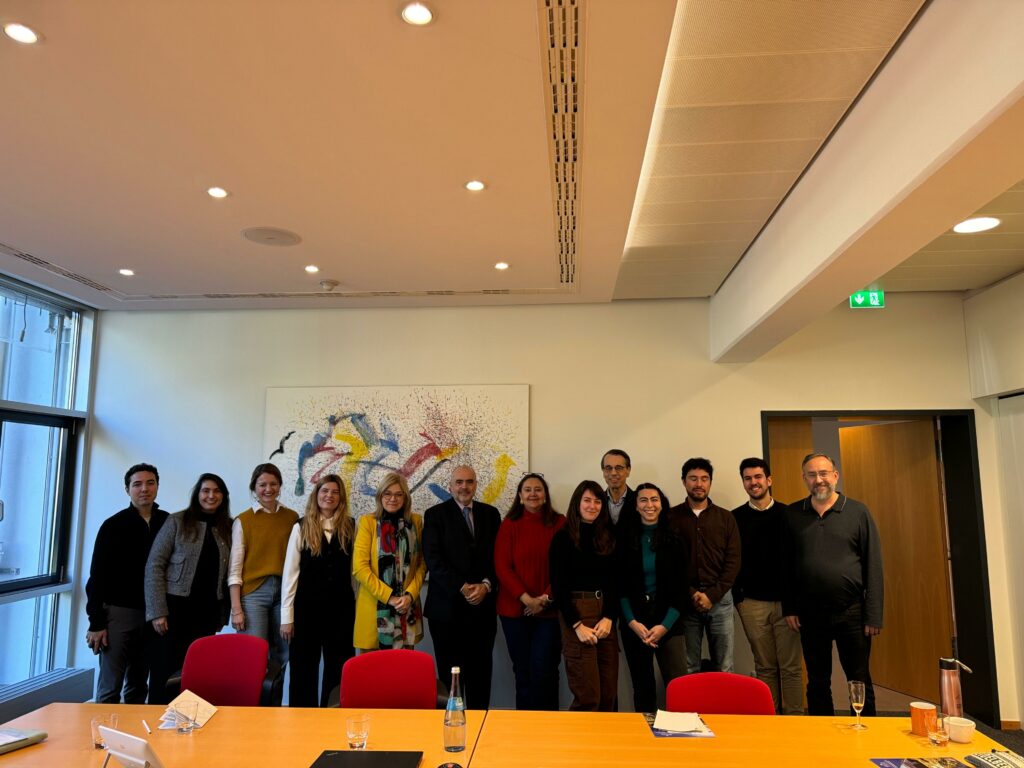
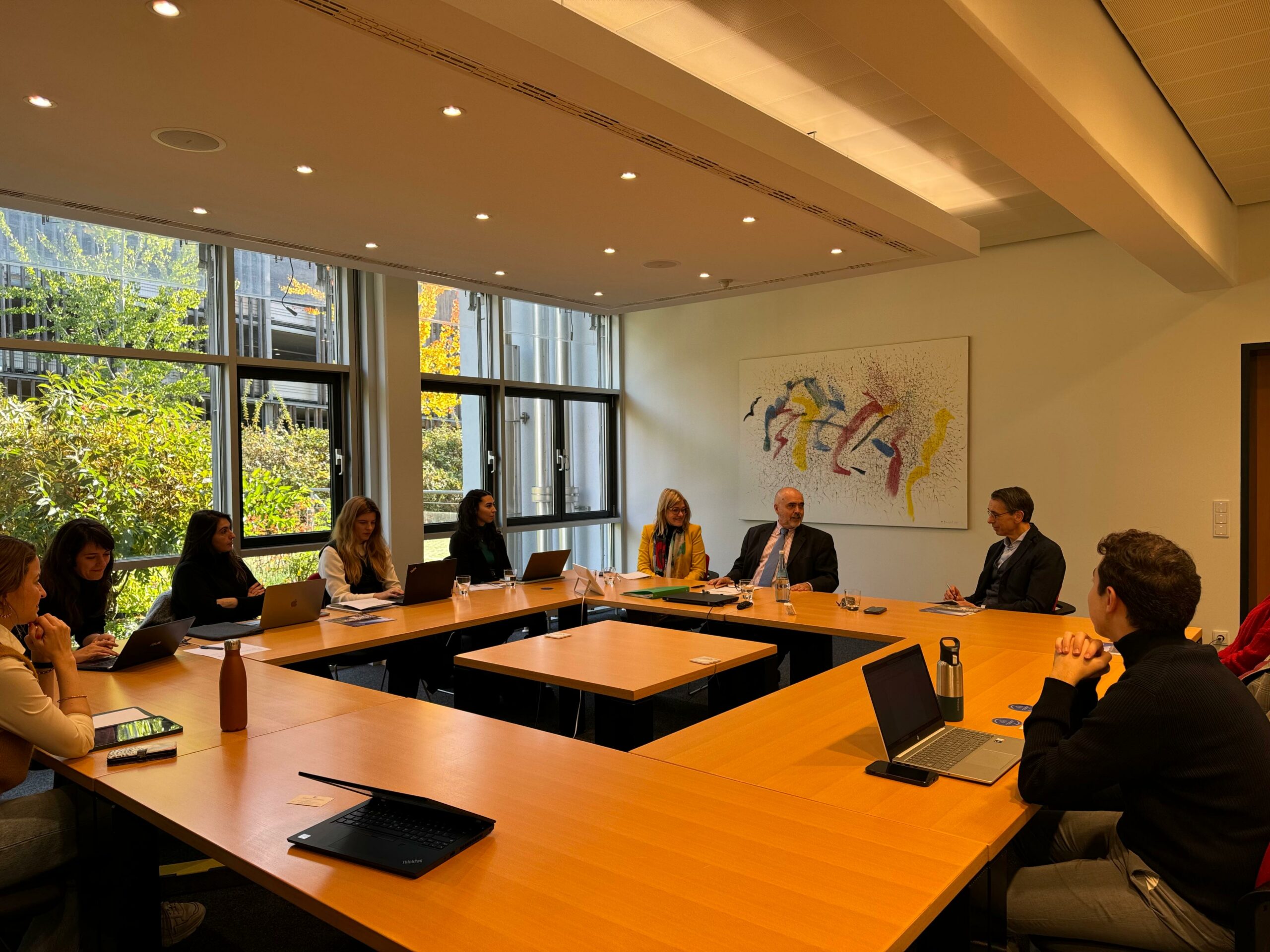
The Max Planck Institute for Comparative Public Law and International Law held a new session of its Ibero-American Colloquium series on the topic “Emerging Technologies and Human Rights.” The lecture was delivered by Eduardo Bertoni, Director of the Center for Human Rights and Humanitarian Law at the American University Washington College of Law, former Special Rapporteur for Freedom of Expression of the Inter-American Commission on Human Rights (IACHR), and current advisor on technology regulation and fundamental rights.
Bertoni offered a critical overview of the complex relationship between emerging technologies and human rights, emphasizing both the opportunities they offer for the advancement of rights and the challenges they pose regarding privacy, regulation, and freedom of expression. He recalled that although the notion of human rights existed before the Second World War, the contemporary conceptualization was consolidated through twentieth-century international treaties. Building on this foundation, he argued that many of the challenges associated with technological innovation can be addressed by applying existing legal frameworks rather than creating entirely new rights.
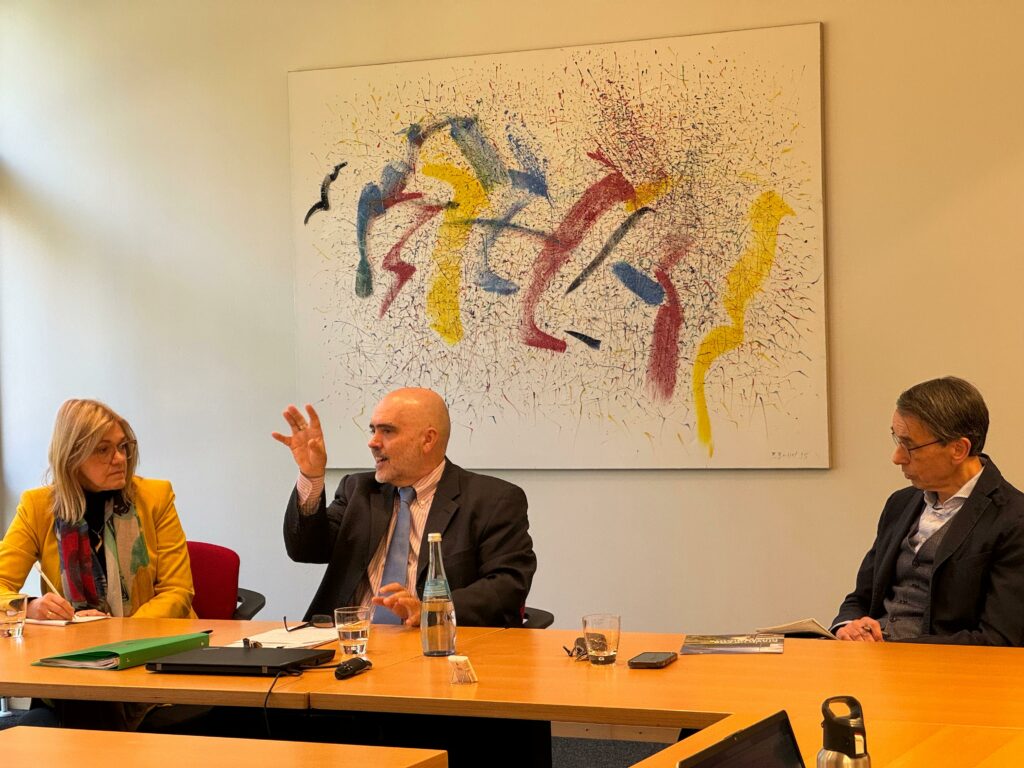
The colloquium examined central debates on internet access, platform responsibility, and content moderation. Bertoni warned that moderation policies may become tools of censorship in countries with weak institutions and encouraged stronger enforcement of current laws, such as electoral codes that sanction the spread of false information during campaigns. He also noted that issues like hate speech and disinformation are not new, although digital platforms have greatly expanded their reach and speed.
The discussion broadened to the use of facial recognition and neurotechnologies, highlighting their implications for privacy and individual autonomy. Bertoni explained that collecting biometric and neurophysiological data without consent can infringe fundamental rights, and he stressed the importance of limiting data collection to specific purposes, ensuring its deletion once fulfilled, and maintaining independent oversight mechanisms.
Participants discussed corporate responsibility for human rights violations, the use of artificial intelligence in judicial systems, and private initiatives such as Meta’s Oversight Board. The conversation also explored the difficulties of achieving international consensus on regulating emerging technologies within a human rights framework.
The session concluded with a shared reflection that emerging technologies and human rights must be understood as interconnected. According to Bertoni, strengthening the protection of fundamental rights in the digital age requires knowledge of the technologies themselves, a balanced approach to regulation, and consistent application of existing international human rights standards.