24.09.2025
Ibero-American Colloquium No. 329: The Right to Democracy and the Inter-American Democratic Test
Jesús María Casal and Mariela Morales Antoniazzi debated the right to democracy and how the Inter-American Democratic Test and judicial independence act as barriers against autocratization.
September 24, 2025, MPIL Heidelberg
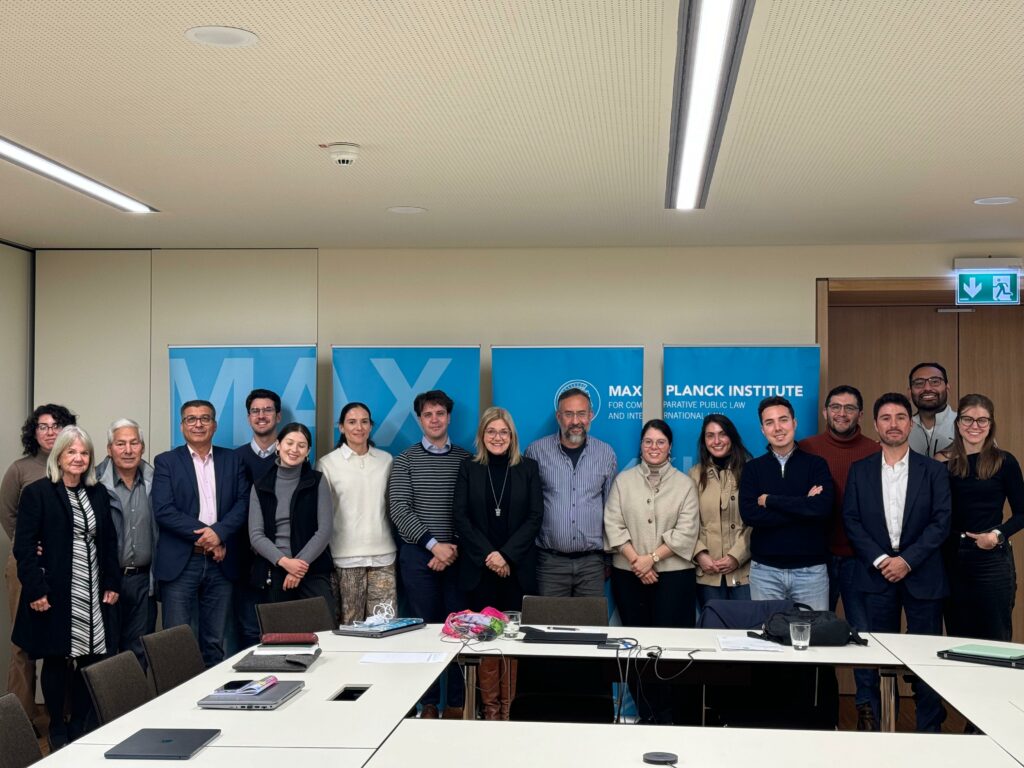
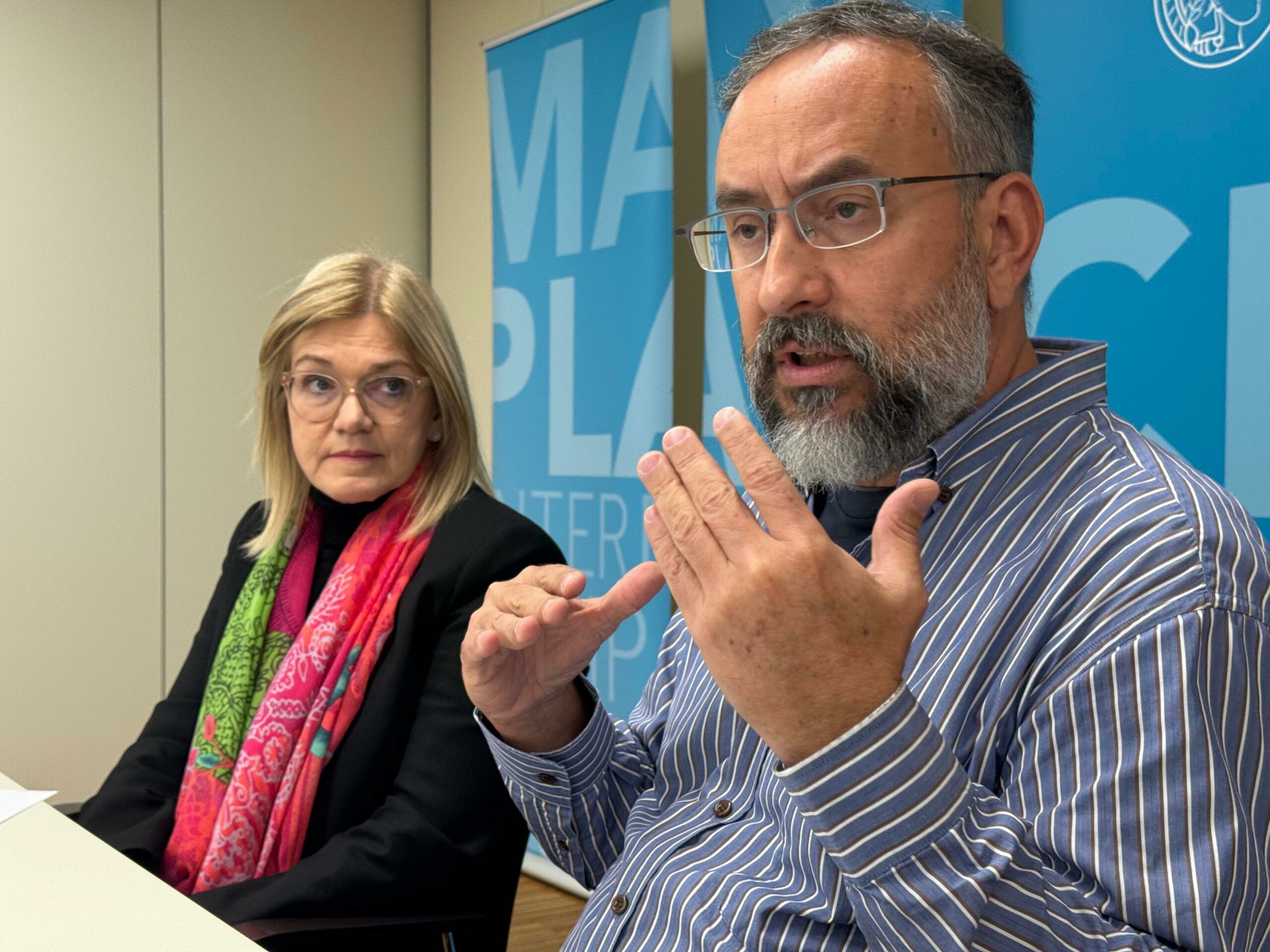
The Max Planck Institute for Comparative Public Law and International Law held a new session of its Ibero-American Colloquium series titled “The Right to Democracy and the Inter-American Democratic Test.” Researcher Mariela Morales Antoniazzi, coordinator of the ICCAL project, presented the progress of her research together with guest speaker Jesús María Casal, a Venezuelan jurist, former dean of the UCAB Faculty of Law, and a distinguished scholar in constitutional law.
The discussion took place in the context of the Request for an Advisory Opinion on democracy and its protection within the Inter-American Human Rights System, submitted by the Republic of Guatemala under Article 64.1 of the American Convention on Human Rights. Casal focused his presentation on the close relationship between democracy, the rule of law, and human rights, highlighting the legal foundations and key judicial developments that have consolidated the right to democracy as a structural principle of the Inter-American system. He emphasized that democracy provides the political and value-based framework in which human rights can be fully realized.
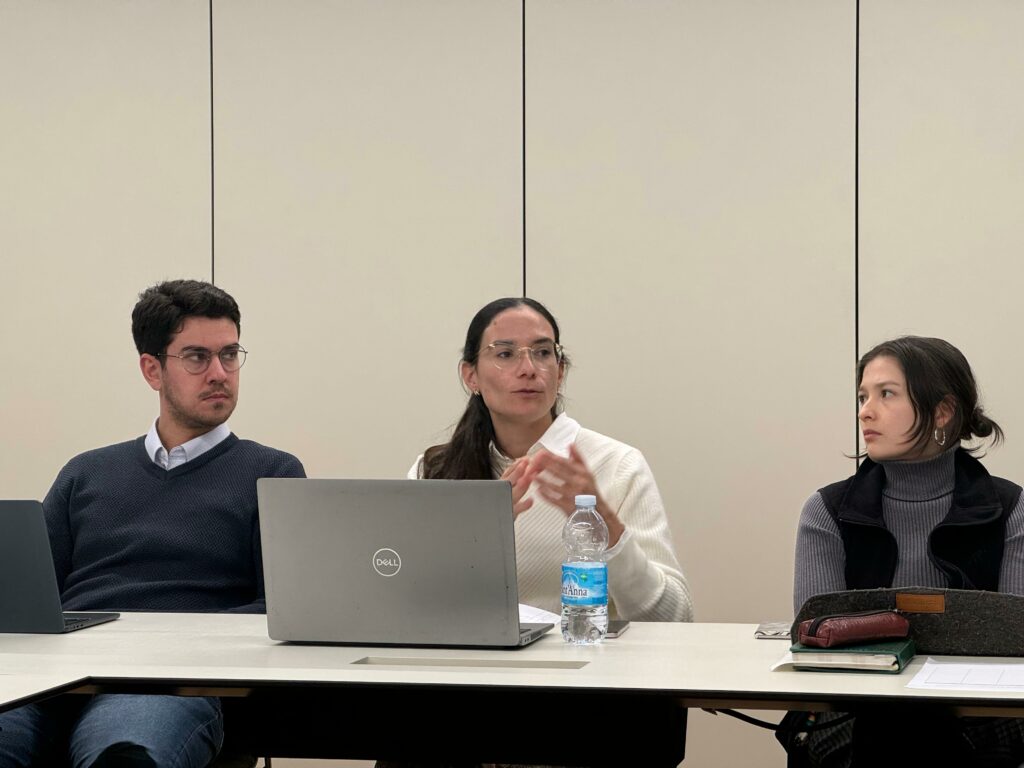
The meeting addressed a troubling diagnosis: Latin America is experiencing a third wave of autocratization, characterized by the concentration of presidential power, the weakening of institutional checks and balances, and the political instrumentalization of the judiciary. In this context, the Inter-American Democratic Test (IDT), derived from the Inter-American Democratic Charter, was underscored as a normative and analytical framework linking democracy, the rule of law, and human rights. Morales Antoniazzi explained that, in the current scenario, the sub-test of judicial independence has gained particular relevance as a structural condition for democracy.
The discussion concluded by reaffirming the importance of the principles of democratic resilience and non-regression, which are central to the ICCAL approach. Morales Antoniazzi and Casal agreed that, in times of democratic backsliding, the right to democracy must be understood not as an abstract declaration but as a structural mandate that requires strong institutions, independent judges, and shared regional standards.