This project explores how legal frameworks can institutionalize citizens’ assemblies, moving them from isolated experiments to stable, protected, and influential mechanisms of democratic governance. Through an intraregional comparison between Chile and Colombia in Latin America, Spain, Belgium, and Ireland in Europe, and a transregional analysis, it examines normative frameworks, founding principles, judicial decisions, doctrine, and international influences (OECD, EU) that shape their regulation.
The project approaches democratic resilience as not only protection against external threats such as populism, polarization, and disinformation but also as a response to the internal inability of constitutional systems to reform and adapt. It reflects on how democratic innovations that foster inclusive deliberation can renew democracy while also highlighting the lack of dialogue with constitutional theory, where questions of legitimacy and institutional design remain underexplored. By studying sequential deliberation in Bogotá, innovations in Central Eastern Europe, climate-related deliberation, and local participatory models, the project identifies the constitutional conditions, structural, organic, and substantive, needed to embed these practices. In doing so, it considers the role of the state, the possibility of granting assemblies constitutional status, and their potential to advance equality, rights, and resilience by addressing both democratic erosion and historical trauma.
Project Allies
Focus
Deliberative democracy
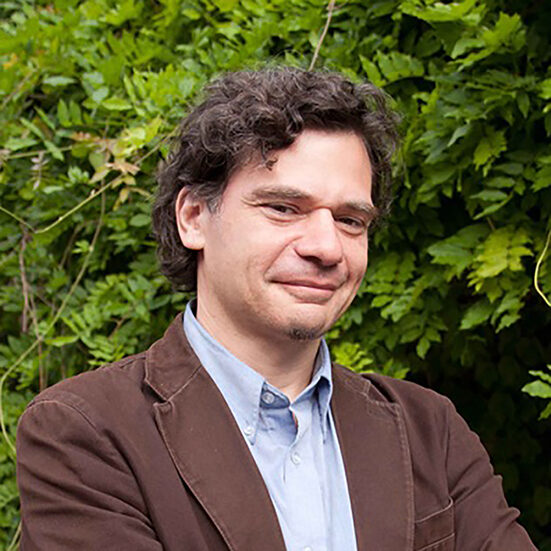
Roberto Gargarella
Roberto Gargarella is Professor of Constitutional Theory and Political Philosophy at Universidad Torcuato Di Tella and Professor of Constitutional Law at the University of Buenos Aires. He holds PhDs in Law from the University of Buenos Aires and the University of Chicago, with postdoctoral studies at Oxford. He has been a visiting scholar at leading universities in Europe and the United States. A recipient of Guggenheim Fellowships, he has published widely on constitutional theory, including Latin American Constitutionalism (2013) and The Legal Foundations of Inequality (2010).

Felipe Rey
Felipe Rey is Assistant Professor of Public Law at Pontificia Universidad Javeriana. His research focuses on democratic theory, democratic innovation, and constitutional law. He has been a visiting researcher at the Center for Human Values at Princeton University, the Institution for Social and Policy Studies at Yale University, and the Max Planck Institute for Comparative Public Law and International Law in Heidelberg. As co-director of Democracy R&D, the global network on deliberative democracy, he collaborates with over 300 experts from 55 countries.

Indira Latorre
Indira Latorre is Professor of Public Law at Universidad del Rosario (Bogotá, Colombia) and holds a PhD in Law from Pompeu Fabra University, with research experience at Princeton. She specializes in public law, democratic theory, and innovation, and has advised organizations such as GIZ and the World Bank. She co-founded iDeemos and co-designed mini-publics such as the Global Assembly and Colombia’s Youth Citizen Assembly.

Nicola Abate
Nicola Abate holds a PhD in Law from the Universitat Pompeu Fabra (Barcelona), where he is currently a Postdoctoral Researcher and a member of the ERC-funded project Institutional Changes for Democratic Dialogue (ICDD). His doctoral research offered a constitutional and democratic reading of the European integration project, situated within the liberal-deliberative tradition associated with thinkers such as Habermas and Rawls. His research interests span constitutional theory, democratic theory, and moral philosophy, with a sustained engagement with the normative foundations of deliberative democracy and constitutionalism.
Introductory readings
- Authoritarianism – Constitutional Perspectives (Edward Elgar, 2020)
- Authoritarian Constitutionalism: Comparative Analysis and Critique (co-edited with Helena Alviar, Edward Elgar, 2019)
- Comparative Constitutional Studies – Between Magic and Deceit (Edward Elgar, 2018)
- Political Technology and the Erosion of the Rule of Law. Normalizing the State of Exception (Edward Elgar, 2014)
- “Legal Transfer” in The Oxford Handbook of Law and Anthropology (2022)
- The Legal Foundations of Inequality (2010)
- The Law as a Conversation Among Equals (2022)
- Los fundamentos legales de la desigualdad (2005)
- Manifiesto por un derecho de izquierda (2023)
- “¿Asambleas ciudadanas para la democracia global?” (2023)
- Participación ciudadana 2.0: democracia digital para la mejora de la calidad normativa (2025)
- Assemblies Across Borders: The Democratic Transposition of Citizens’ Assemblies in Latin America (forthcoming)
- El sistema representativo: las representaciones políticas y la transformación de la democracia parlamentaria (2023)
- “Spotlighting the Backstage Governance of Citizens’ Assemblies: Lessons from East Asia, Europe and Latin America” (2024)
- Česnulaitytė, I., Rey, F., & Niño-Aguilar, S. (2025). The Year in Deliberation 2024: Democracy R&D’s Annual Report on Key Trends and Developments in Deliberative Democracy. Democracy R&D.
- Assemblies Across Borders: The Democratic Transposition of Citizens’ Assemblies in Latin America (forthcoming)
- Česnulaitytė, I. (2024). Citizens' Assemblies: Democratic Responses to Authoritarian Challenges in Central and Eastern Europe. DemocracyNext.
- Česnulaitytė, I., & Chwalisz, C. (2023). Assembling an Assembly: A How-to Guide. DemocracyNext.
- Česnulaitytė, I. (2021). Evaluation Guidelines for Representative Deliberative Processes. OECD Publishing.
- Chwalisz, C., & Česnulaitytė, I. (2020). Innovative Citizen Participation and New Democratic Institutions: Catching the Deliberative Wave. OECD Publishing.
Get to know our ICCAL projects
Discover the projects that bring ICCAL to life through research, collaboration, and local initiatives.