The ICCAL Lab
The ICCAL Lab is a collaborative research project between Latin America and Europe that examines democratic resilience from an interregional comparative legal perspective. It brings together researchers who analyze how constitutional frameworks, institutions and social practices can strengthen democracies in the face of current challenges.
Academic Coordinator: Carolina Bejarano
Who are we?
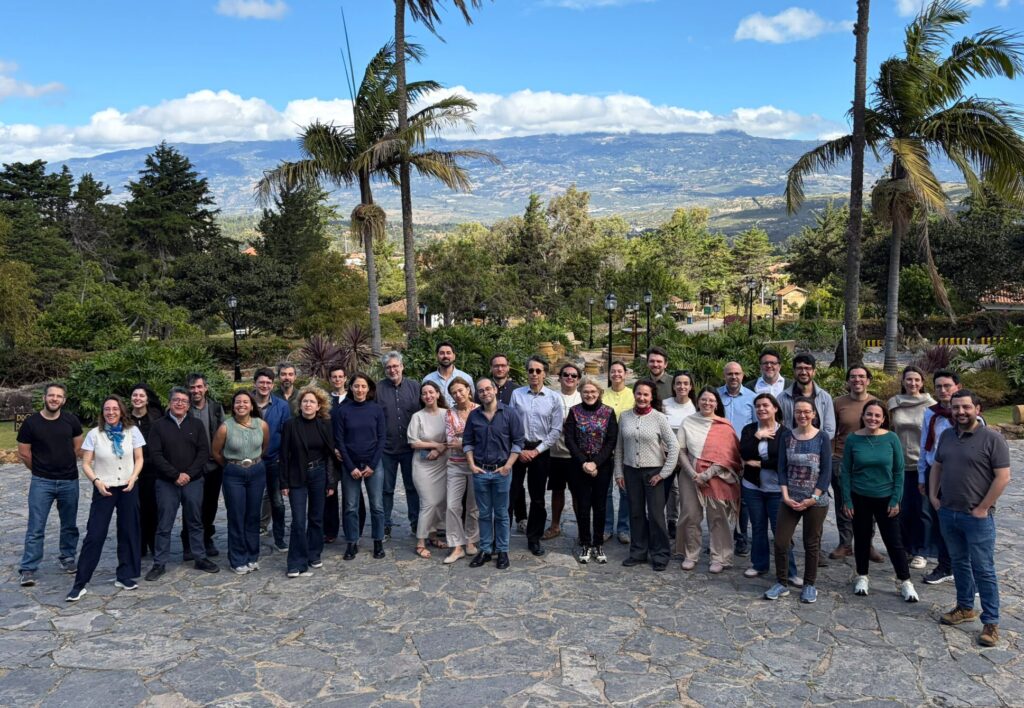
We are a group of 46 researchers from Latin America and Europe, 57% women and 43% men, dedicated to the study of comparative constitutionalism and democratic resilience. Half of the members come from each region, reflecting the collaborative and interregional character of the project, which develops legal comparisons within and between regions.
Democratic resilience
Democratic resilience is the capacity of a constitutional system and its political and social environment to prevent, resist, and recover from shocks or erosions that threaten democracy and the rule of law, maintaining institutional functioning and preserving the democratic constitutional core consisting of free elections, separation of powers, and fundamental rights.
Interregional comparison
Regional legal comparison is an approach that analyzes constitutional law within and between regions in order to identify common patterns and understand how law contributes to the formation of regional orders. It also allows the comparison of constitutional dynamics across different regional contexts and the observation of how constitutional processes develop in different regions.
Purpose
The ICCAL Lab is a research space that promotes new approaches to transregional legal comparison between Latin America and Europe. It builds on the tradition of the Ius Constitutionale Commune en América Latina (ICCAL) project at the Max Planck Institute for Comparative Public Law and International Law. Its objective is to study democratic resilience from the perspective of comparative constitutional law and to analyze how constitutional systems can resist, adapt, recover, and transform in the face of crises and threats.
Formation of the Lab
It brings together ten transatlantic teams composed of senior scholars and young researchers from various countries in Latin America and Europe. Each team develops joint research over three years through co-authorship and a methodology of “slow comparison”, aimed at identifying relevant legal phenomena in each region and analyzing their interrelations from a transregional perspective.
Topics and teams
The ICCAL Lab is structured around ten collaborative research projects, involving academics from Latin America and Europe. Each project explores, from a specific angle, how comparative constitutional law and transformative constitutionalism can strengthen democratic resilience in the face of crises such as authoritarianism, disinformation, geopolitical fragmentation, climate change, and abuse of legislative power.
Colombia and Germany as Archetypical Constitutional Courts for Regional Democratic Resilience
How can two archetypical constitutional courts catalyze democratic resilience?
Digital Challenges to Democratic Resilience
How should courts respond to electoral disinformation and AI-driven manipulation?
REconfiguring State POwers in the 21st Century as a Tool for Democratic Resilience (RESPO)
When do collaboration mechanisms between powers strengthen socio-economic rights?
Courts and Judges: Friends or Foes of Democratic Resilience? (COFFIN)
Do judicial tenure and autonomy protect democracy from erosion?
Democratic Resilience, Climate Litigation, and Intergenerational Justice
Can climate litigation integrate intergenerational justice into democracy?
Transformative Constitutionalism in Times of Geopolitical Fragmentation
Can transformative constitutionalism survive global fragmentation?
From Innovation to Institution: Embedding Citizens’ Assemblies in the Law
When do citizens’ assemblies become constitutional institutions?
Legal and Institutional Foundations and Mechanisms of Democratic Resilience
Which mechanisms effectively prevent democratic erosion?